
Last updated September 10, 2026
Full 25-point door and opener safety check with every visit - springs, cables, rollers, tracks, and your LiftMaster or Chamberlain opener included
You get a price before we start. It does not change when the truck arrives.
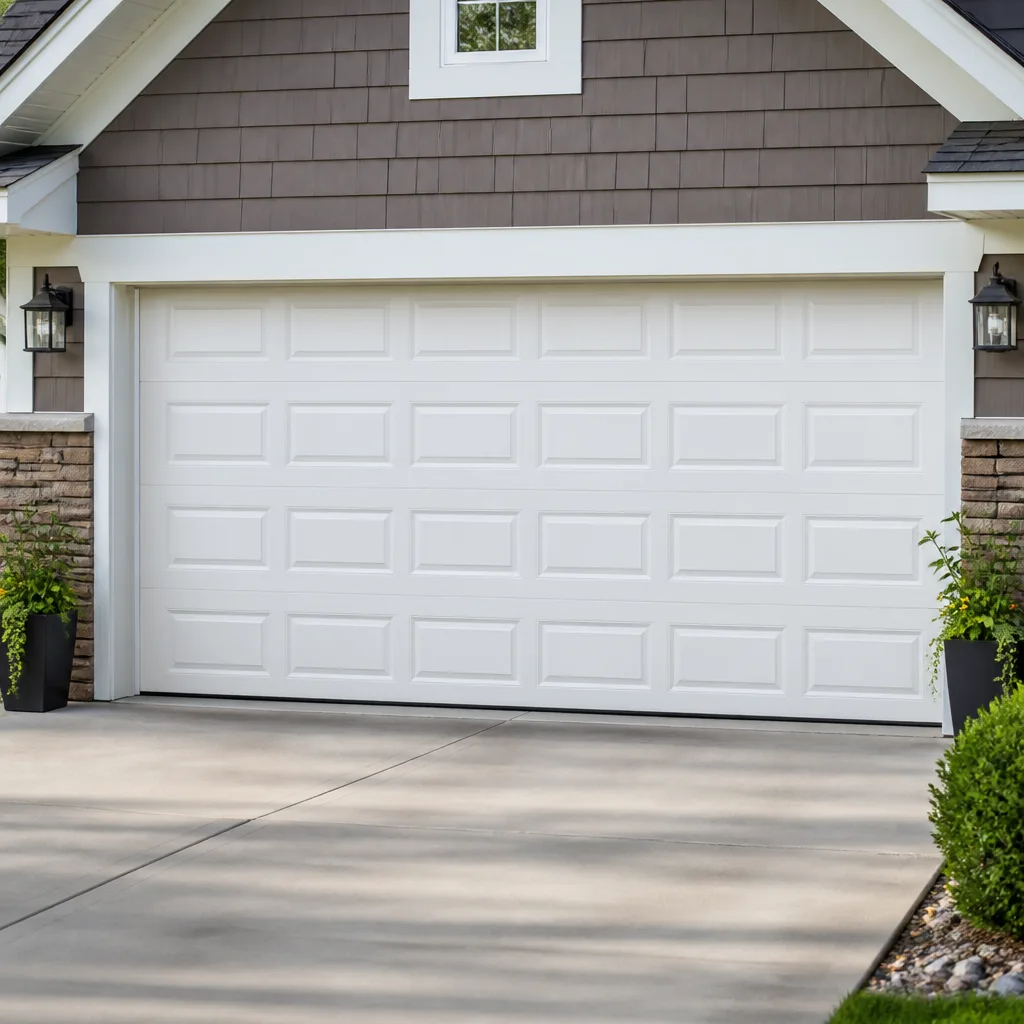
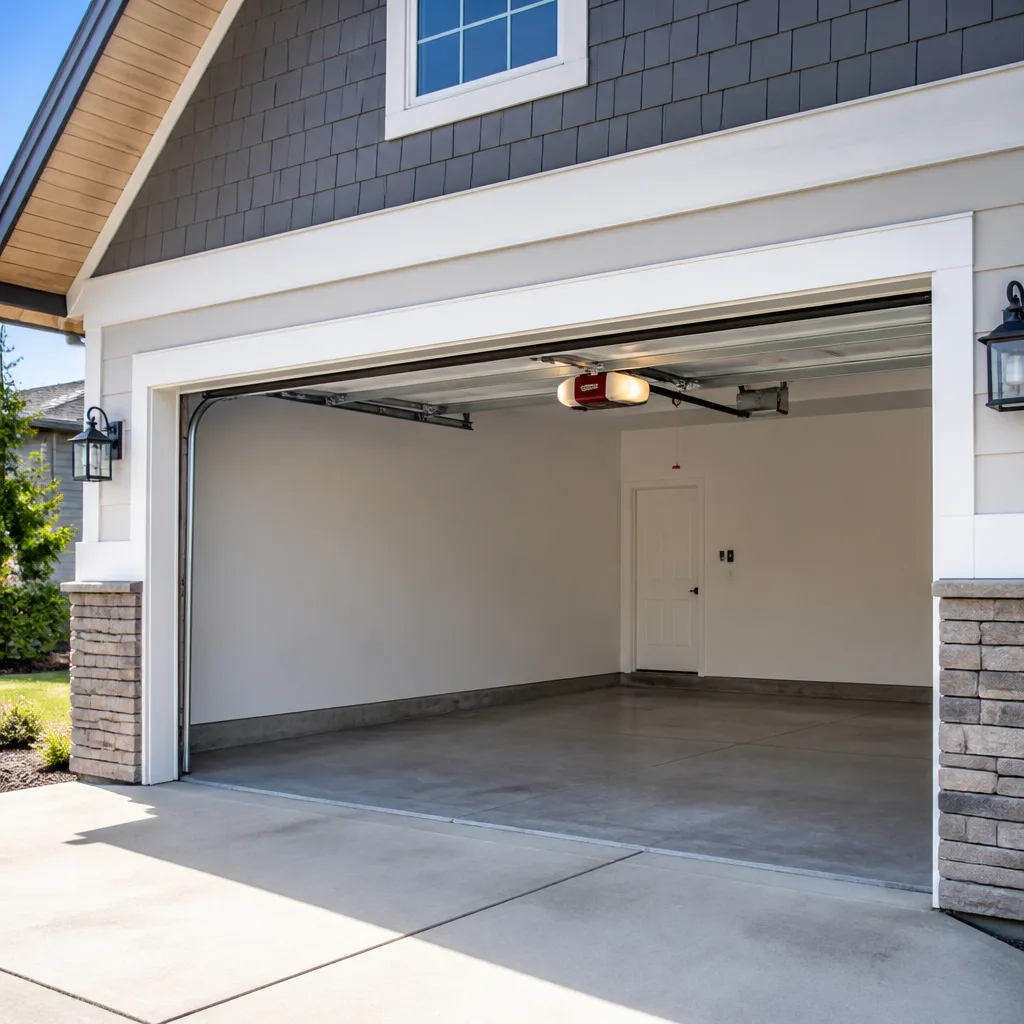
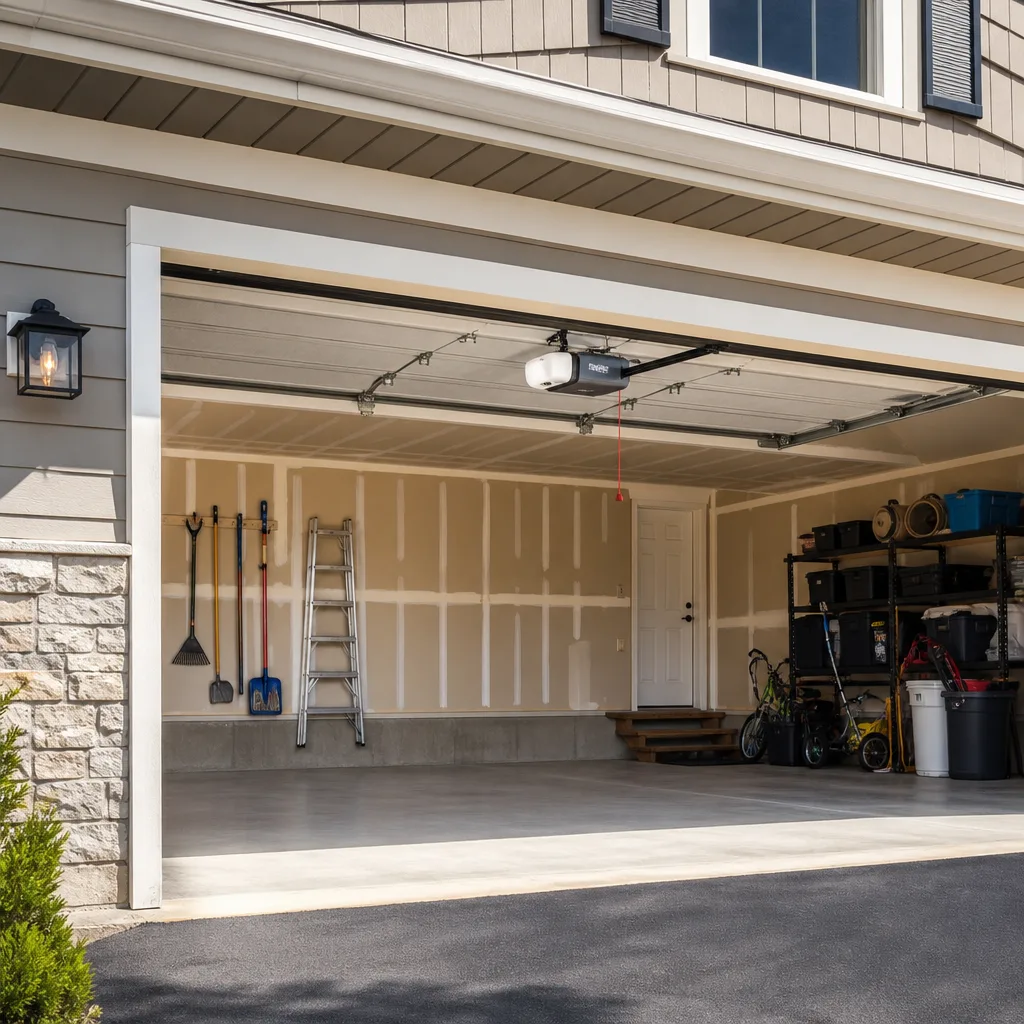
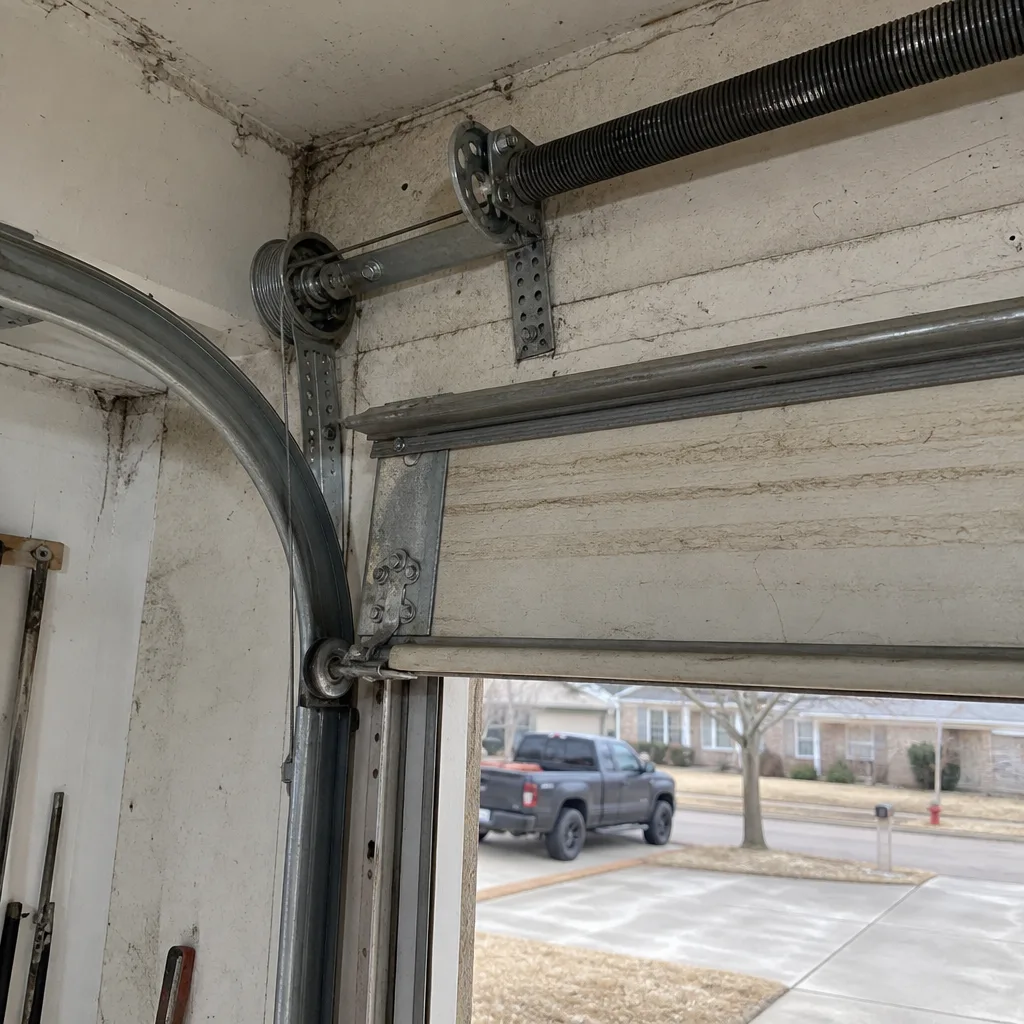 Before
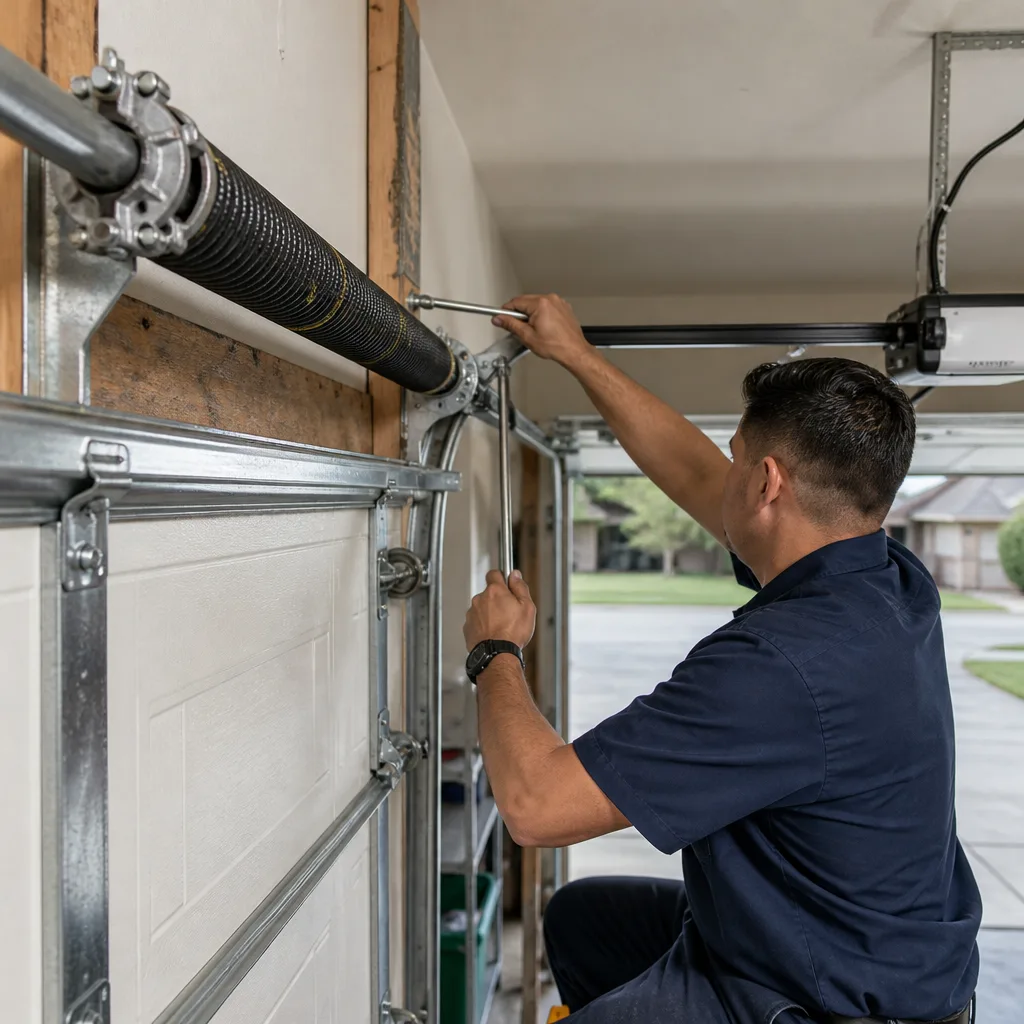 After
After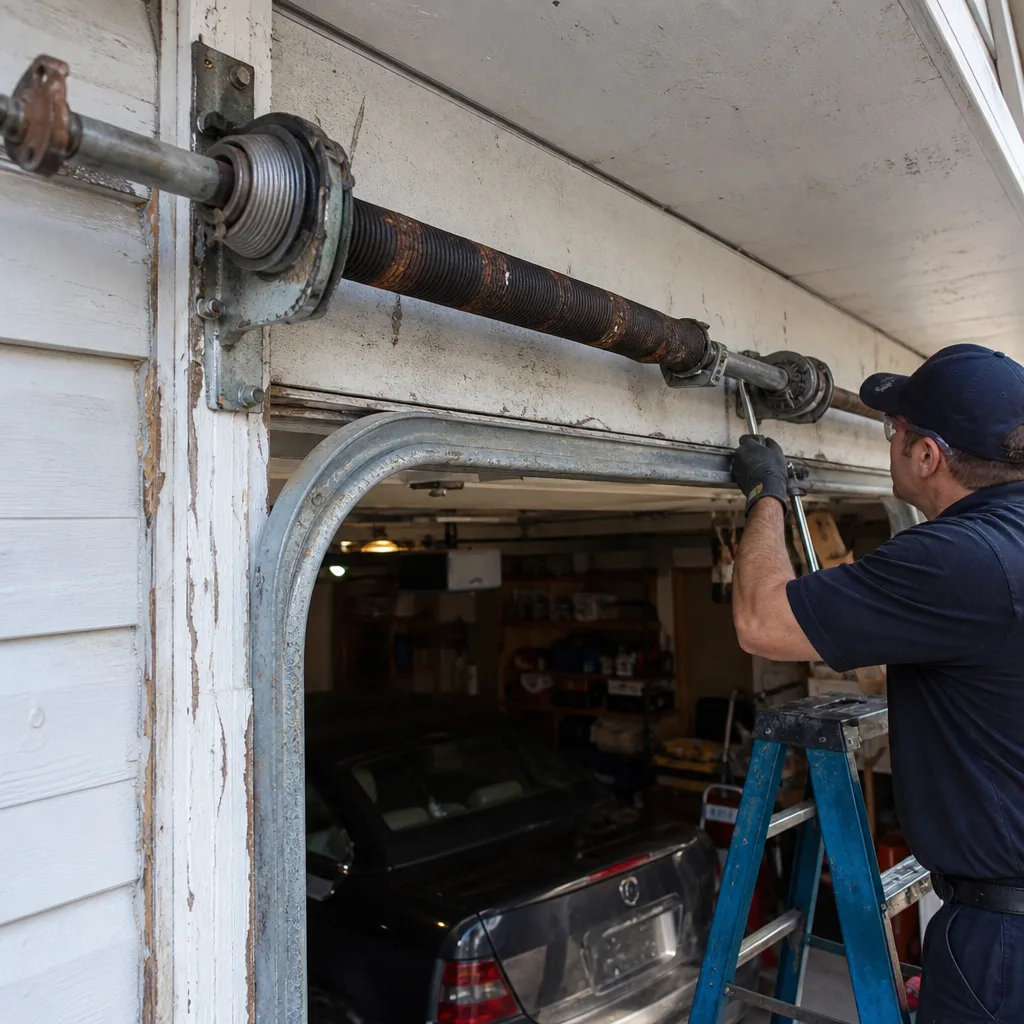 Before
 After
After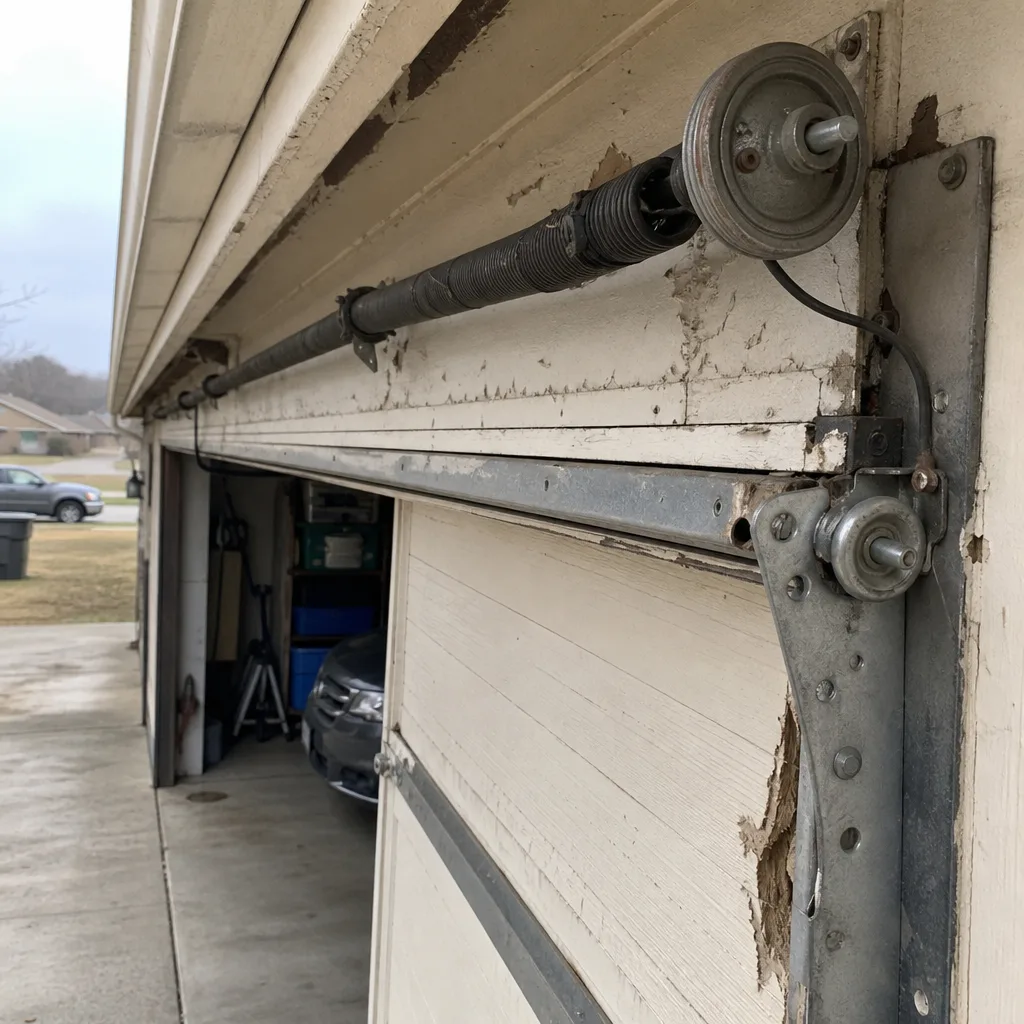 Before
 After
AfterThe Complete Guide to Garage Door in Denton
The average garage door moves up and down more than 1,500 times a year - more mechanical cycles than almost any other moving part of your home - yet most owners cannot name a single component inside the torsion tube above their head. In Denton, where clay-heavy soil shifts with every summer drought and winter freeze, that mechanical ignorance costs homeowners money they never planned to spend. This guide treats your garage door as the infrastructure it is: a counterweighted system of springs, cables, rollers, and tracks that demands the same practical understanding as your HVAC or your roof. By the end, you’ll know how to read your door’s specifications, predict its failure points, and decide which problems you can manage and which ones require a trained technician.
Quick Answer
A well-maintained garage door in Denton should last 15-30 years depending on material, cycle-life rating, and how well the system is balanced against North Texas soil movement. Most emergency failures involve the torsion spring, the opener’s drive gear, or track misalignment caused by foundation settling - all of which can be diagnosed in minutes by a technician with the right parts on the truck. Understanding your door’s components, cycle rating, and local wear factors lets you plan replacements instead of reacting to breakdowns.
Table of Contents
- How Garage Doors Actually Work
- How Denton’s Soil and Foundation Movement Affects Your Door
- Torsion Springs vs. Extension Springs: Why It Matters
- Reading Your Door’s Cycle-Life Rating
- Door Materials and the Denton Climate
- Garage Door Openers: Belt, Chain, and Screw Drive
- What You Can Safely Do Yourself
- Why Same-Day Parts Finish Jobs in One Visit
How Garage Doors Actually Work
A garage door is not lifted by the opener. The opener provides a small assist - roughly 10 to 15 pounds of force - while the springs do the actual work. A standard 16-foot steel door can weigh 150 to 200 pounds. Without properly tensioned springs, your opener would strain, overheat, and fail within weeks.
The system works through counterbalance. Torsion springs, mounted on a steel tube above the door opening, wind and unwind to store and release energy. Extension springs, mounted parallel to the horizontal tracks, stretch and contract. Cables transfer that spring force to the bottom corners of the door. Rollers ride inside vertical and horizontal tracks. Hinges allow the door panels to pivot as the door rounds the curve from vertical to horizontal.
When any one component fails, the load shifts to the others. A broken spring forces the opener to carry full weight. A frayed cable throws the door out of level, binding rollers in the track. A single bad roller increases friction across the entire system. This is why experienced technicians in Denton inspect the whole assembly, not just the broken part.
Here is what each major component does:
- Torsion springs: Store rotational energy to lift the door. Rated in cycle life - typically 10,000, 20,000, or 30,000 cycles.
- Extension springs: Stretch to provide lifting force. Common on older or lighter doors. Require safety cables to contain breakage.
- Cables: Transfer spring force to the door’s bottom brackets. Fraying or rust weakens them predictably.
- Rollers: Nylon or steel wheels that ride inside the tracks. Worn rollers cause vibration, noise, and track wear.
- Tracks: Guide the door’s path. Must be plumb, level, and properly spaced. Even 1/4 inch of misalignment causes binding.
- Hinges: Connect door panels. Numbered by position; #1 at the bottom, #4 or higher at the top on sectional doors.
- Opener: Provides automated assist and safety reversal. The motor does not do the heavy lifting.
In our experience across Denton, from the historic homes near the Square to the newer construction in Southridge, the most common point of confusion is the opener. Homeowners replace a failed opener only to find the real problem was a weak spring forcing the motor to overwork. A proper diagnosis starts with the springs, not the remote.
How Denton’s Soil and Foundation Movement Affects Your Door
Denton sits on the Blackland Prairie, with clay-heavy soil that expands when wet and contracts during dry spells. This is not abstract geology. In neighborhoods like Oakmont, Forrestridge, and areas around Garage Door Repair in Denton, we regularly see garage door frames pulled out of square by foundation movement that shifted the entire structure 1/2 inch or more.
When a foundation settles unevenly, the garage door opening becomes a parallelogram instead of a rectangle. The door still tries to travel straight up and down. Rollers bind in the now-twisted tracks. The weather seal gaps on one corner and compresses on the other. In severe cases, the door pops out of the track entirely.
Signs that soil movement has affected your door:
- Uneven reveal: The gap between door and frame is wider at one corner than the other.
- Roller popping: Rollers climb the track edge or jump out during operation.
- Seal failure: Light or water visible under one side of the closed door.
- Opener straining: Motor labors or reverses unexpectedly, especially on one side of the travel.
- Cracked drywall: Stress fractures above or beside the garage door interior frame.
Correcting foundation-related door problems requires more than adjusting the tracks. The frame must be brought back to square, often with a process called “reframing” or installing a floating header that accommodates future movement. Simply bending the track to fit a twisted opening guarantees callbacks.
In Denton’s climate, the worst shifting typically follows extended drought - common in North Texas summers - followed by sudden soaking rains. The soil shrinks, creates voids, then swells rapidly. If your door worked fine in March and binds by August, check your foundation before you replace the opener.
Carl Dutton has seen this pattern repeat across four decades in the trade. “The door tells you what the house is doing,” he notes. “A technician who only looks at the door is doing half the job.”
Torsion Springs vs. Extension Springs: Why It Matters
The spring system determines how your door behaves, how safely it fails, and what a repair costs. Most Denton homes built after 1995 have torsion springs. Older homes and some builder-grade installations still use extension springs. Knowing which you have matters the moment something breaks.
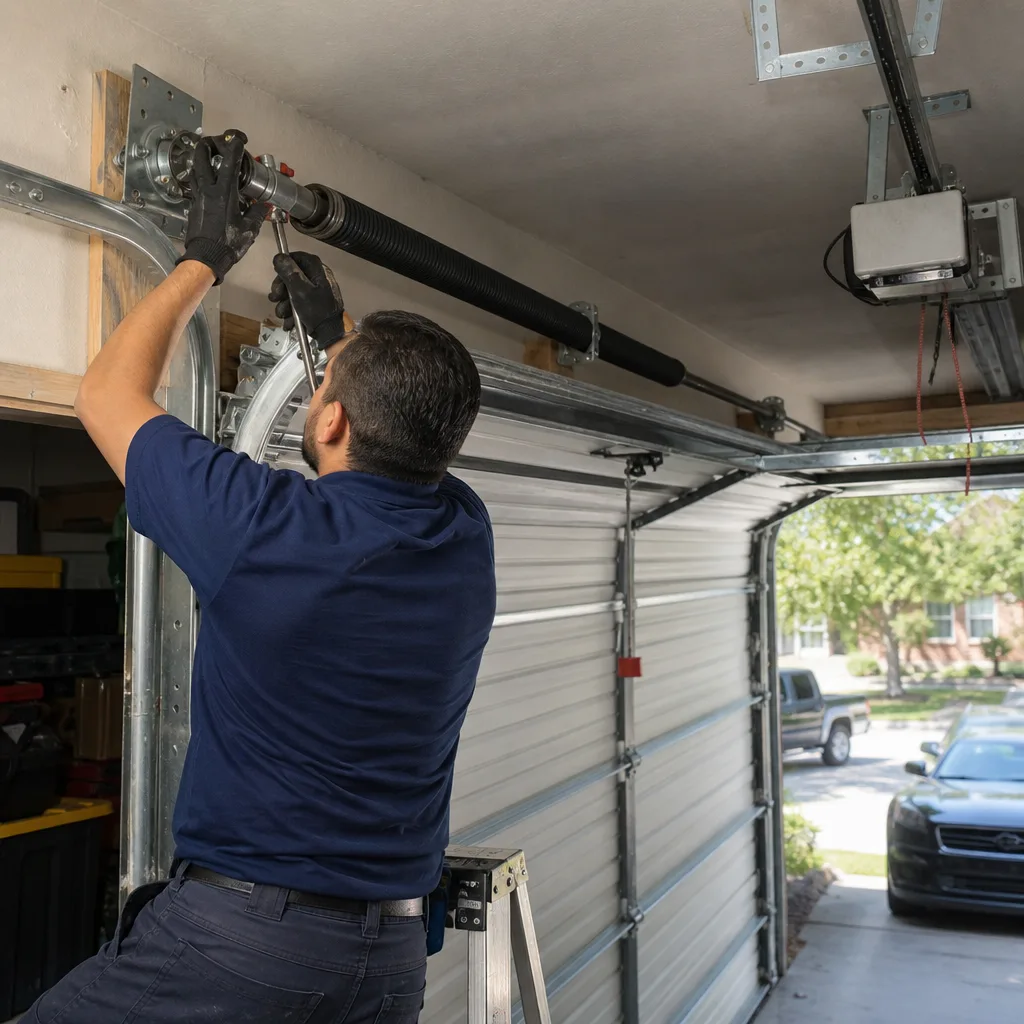
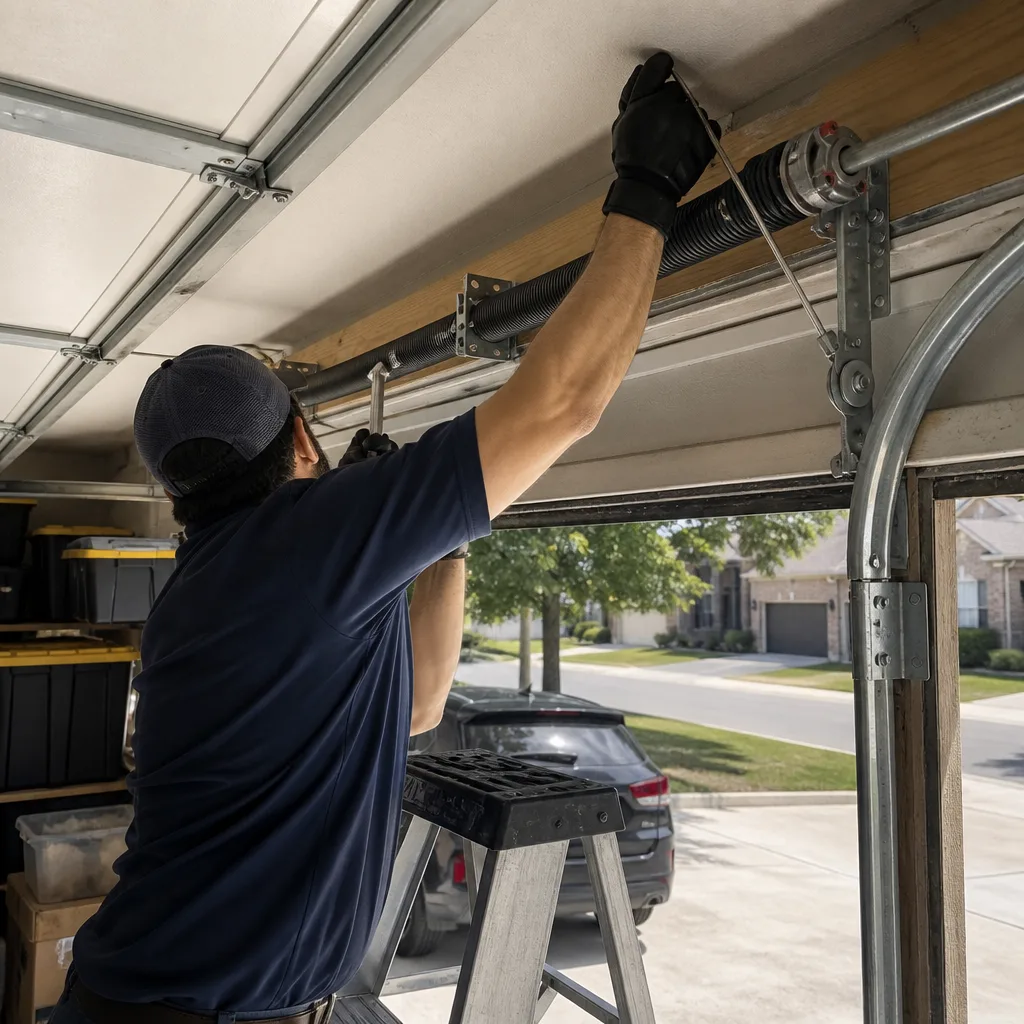
Torsion springs mount horizontally above the door on a steel tube. They wind tight to store energy, then unwind to release it. Because the spring is contained on the tube, a break is loud but not dangerous to bystanders. Torsion systems allow finer balance adjustments and last longer for equivalent cycle ratings.
Extension springs mount on either side of the door, parallel to the horizontal tracks. They stretch to provide lift. When they break, they can fly with lethal force unless contained by safety cables - a code requirement since the early 1990s, but still missing on some older installations we encounter in Denton’s pre-1980 housing stock - one reason to understand Garage Door Permits, Codes & Inspections in TX: What You Need to Know.
| Factor | Torsion System | Extension System |
|---|---|---|
| Spring location | Above door on tube | Alongside horizontal tracks |
| Contained breakage | Yes - spring stays on tube | No - requires safety cables |
| Balance precision | Fine adjustment possible | Coarser adjustment |
| Typical lifespan | 15,000-30,000 cycles | 10,000 cycles |
| Repair complexity | Requires specialized tools | Simpler but riskier |
| Cost to replace (Denton market) | $180-$340 per spring | $150-$280 per pair |
We do not recommend homeowners replace either type of spring. Torsion springs carry enough stored energy to cause serious injury or death. Extension springs without safety cables are equally dangerous. The winding bars, cable tension, and bracket torque require training and proper tools. This is not a YouTube project.
When you call for service, describe your system accurately. A torsion spring job requires different parts and more time than an extension spring replacement. At Mainspring Garage Door Co. home, we stock both systems so our technicians arrive prepared - no second trip, no waiting on a warehouse delivery.
Reading Your Door’s Cycle-Life Rating
Every spring has a cycle-life rating: the number of full open-close cycles before metal fatigue causes failure. Standard builder-grade springs are rated at 10,000 cycles. Upgraded springs run 20,000 or 30,000 cycles. The math is simple and worth doing.
At four cycles per day - morning departure, return, evening departure, return - a 10,000-cycle spring lasts roughly 6.8 years. A 20,000-cycle spring lasts 13.7 years. A 30,000-cycle spring lasts 20.5 years. Most Denton homeowners with attached garages and active families exceed four cycles daily. At six cycles, that 10,000-cycle spring fails in 4.5 years.
Here is how to estimate your actual usage:
- Count door cycles for one typical weekday and one weekend day.
- Average the two, then multiply by 365.
- Divide the spring’s cycle rating by your annual cycles for estimated years of service.
- Subtract 15% for Denton’s temperature extremes - metal fatigues faster in heat and cold cycles.
Example: A family in Robson Ranch with five daily cycles and 20,000-cycle springs: 20,000 ÷ (5 × 365) = 10.9 years. With the 15% climate adjustment: roughly 9.3 years.
The cycle rating is usually stamped on the spring itself - a code like “P200” or “LW225” that translates to wire size, length, and wind direction. A technician reads this in seconds. Homeowners can photograph the spring and email it for a parts check, but do not attempt to measure under tension.
When we replace springs in Denton, we typically recommend 20,000-cycle minimum for primary doors and 30,000-cycle for doors used as main home entrances. The upfront cost difference is modest; the replacement cycle difference is years.
Door Materials and the Denton Climate
North Texas weather punishes exterior materials. Summer attic temperatures above a garage door can reach 140°F. Hailstorms dent thin steel. UV degrades paint and vinyl coatings. Humidity swells wood and rusts unprotected hardware. Your material choice should account for this.
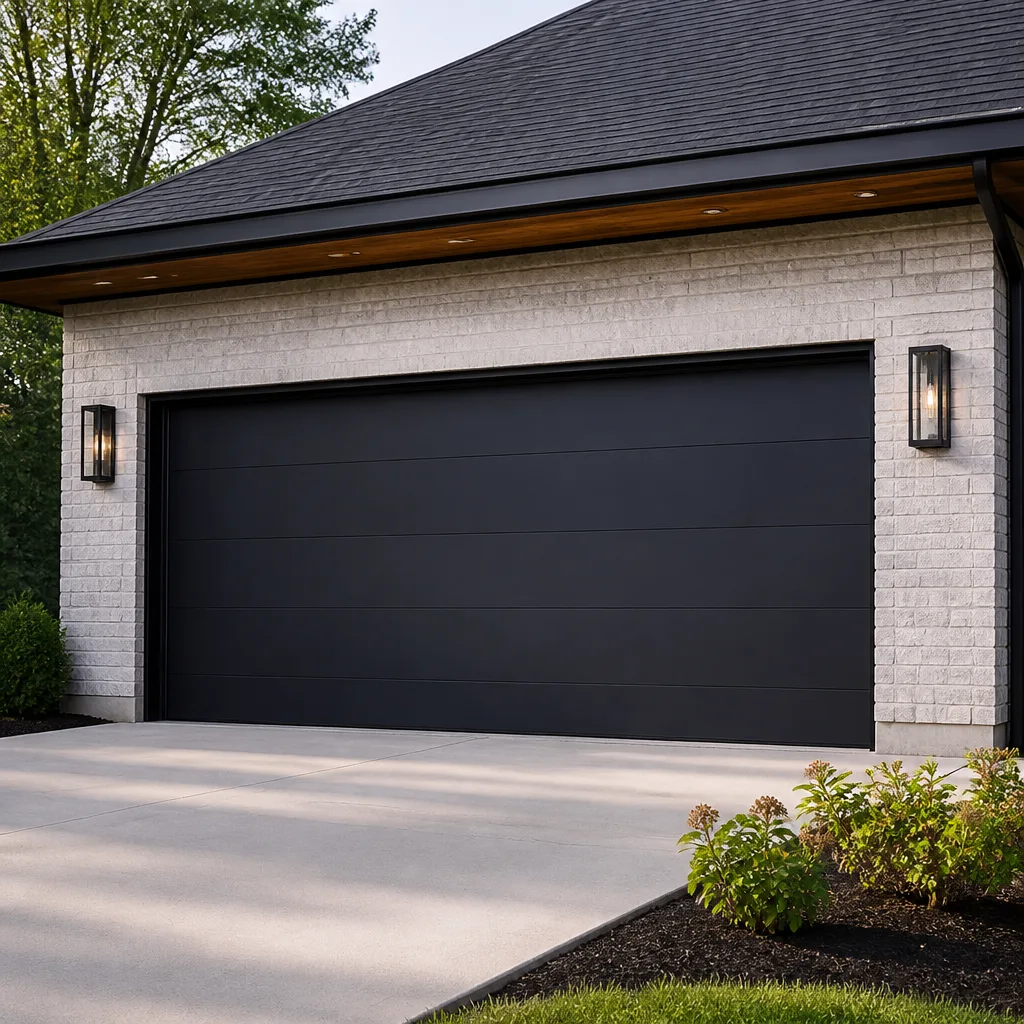
Steel: The most common material for good reason. Modern steel doors use 24- to 26-gauge steel with baked-on polyester or vinyl coatings. Insulated steel (two steel skins with polyurethane foam between) resists denting, reduces thermal transfer, and operates more quietly. In Denton, we specify insulated steel for any attached garage or workshop space. Uninsulated single-skin steel is adequate for detached utility buildings but will sweat in humid conditions and transfer heat aggressively.
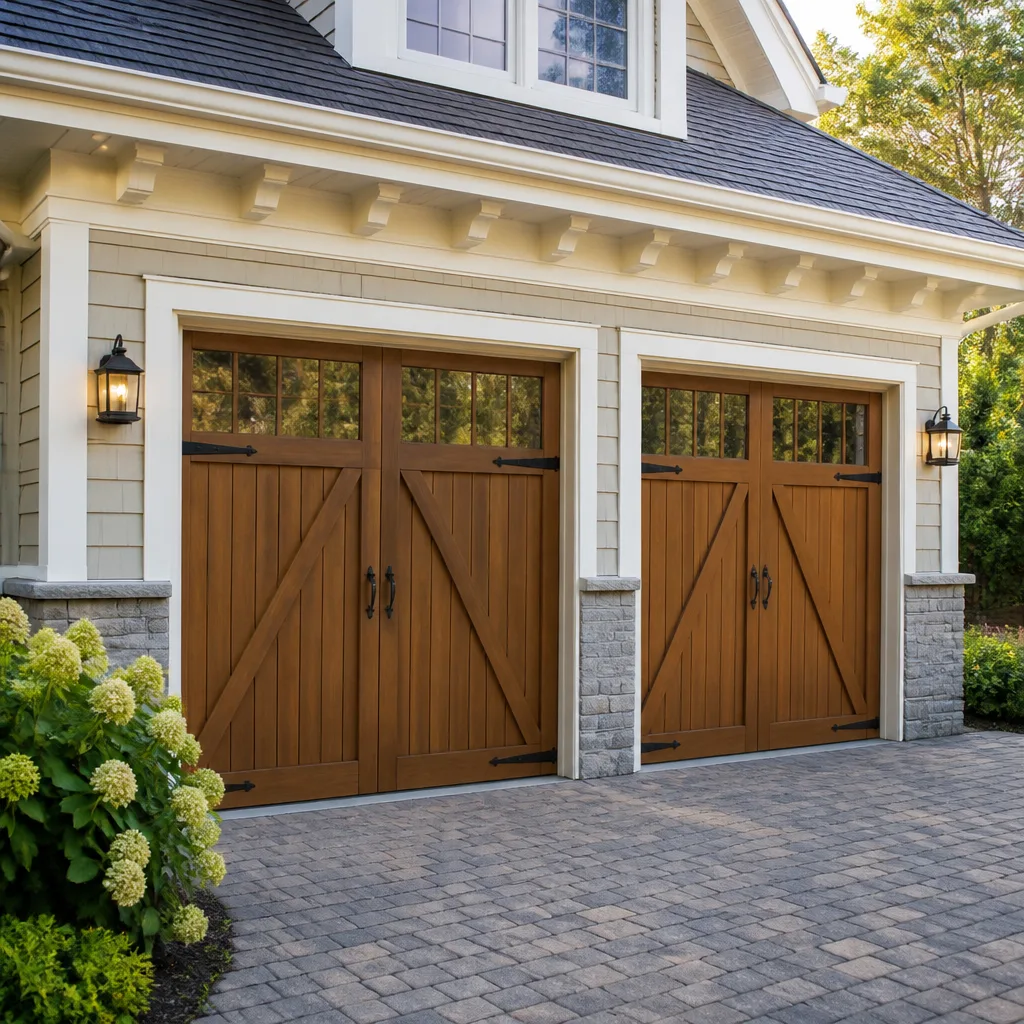
Wood: Cedar and redwood overlay doors offer unmatched appearance for historic or custom homes. They require staining or painting every 2-3 years in North Texas sun. Without maintenance, wood checks, warps, and delaminates. We install wood doors for clients who value the aesthetic and commit to the upkeep.
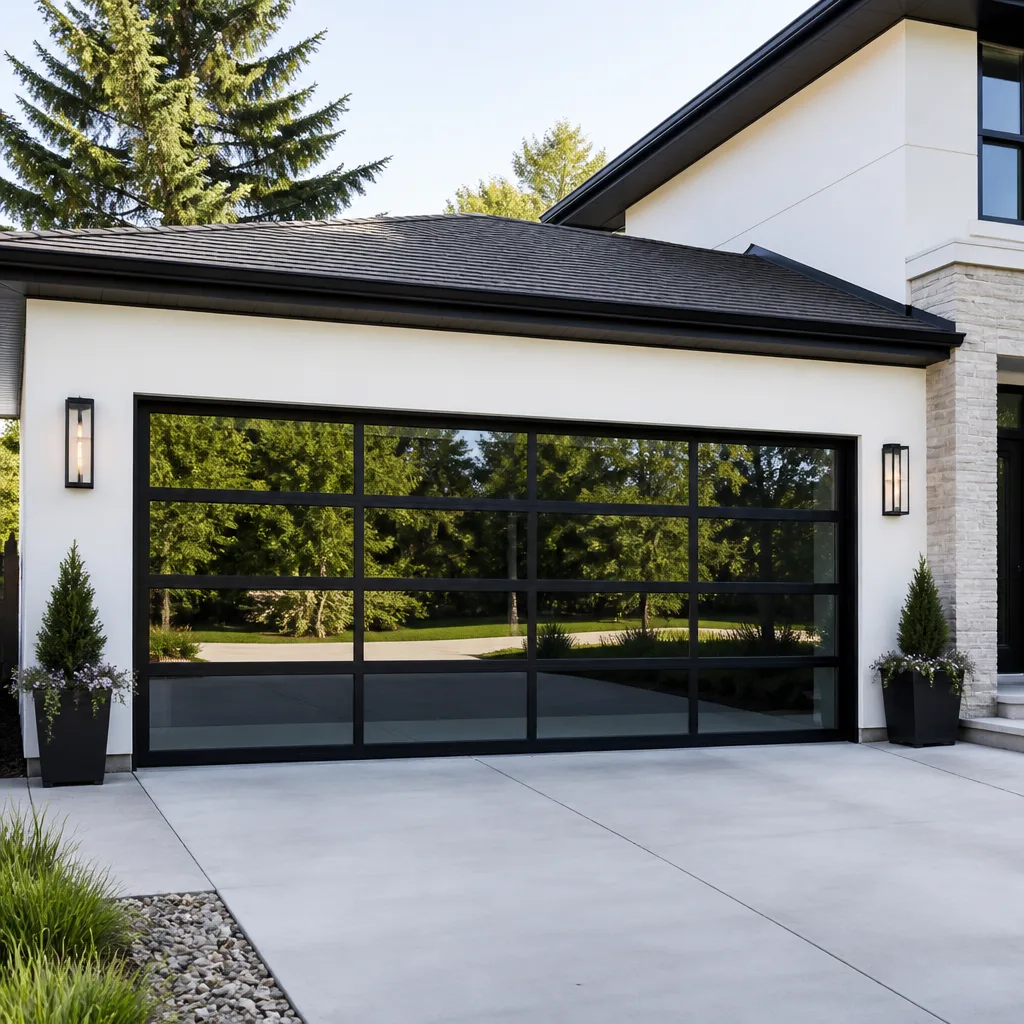
Aluminum and glass: Popular for modern architecture. Aluminum resists corrosion but dents easily. Full-view glass panels require tempered safety glass and provide minimal insulation. Best for climate-controlled garages or showpiece installations, not for energy-conscious primary use.
Fiberglass and composite: Resist denting and corrosion, can mimic wood grain, and require less maintenance. Quality varies widely; cheap fiberglass cracks in temperature extremes. We specify composite doors from established manufacturers like Garage Door Installation in Denton partners when clients want wood appearance without wood maintenance.
For Denton’s climate, our standard recommendation is an insulated steel door with a minimum R-value of 10. The insulation moderates garage temperature, reduces noise, and adds structural rigidity that resists the minor racking caused by foundation movement. Brands we install regularly include Amarr and Wayne Dalton, both of which offer Denton-appropriate wind-load ratings and insulation packages.
Garage Door Openers: Belt, Chain, and Screw Drive
The opener is the most visible and least understood part of the system. It provides 10-15 pounds of pulling force, safety reversal, and remote convenience. The drive mechanism - belt, chain, or screw - determines noise level, maintenance needs, and longevity.
Belt drive: A reinforced rubber or polyurethane belt moves the trolley. Quietest option. Best for attached garages with living space above or beside. Belt drives require minimal maintenance and typically last 10-15 years. We install LiftMaster belt drives as our standard recommendation for Denton homes with bedrooms near the garage.
Chain drive: A metal chain similar to a bicycle chain. Reliable and economical but noisy. Suitable for detached garages or where noise is not a concern. Chain drives need periodic lubrication and tension adjustment. In our experience, chain drives outlast belt drives in unconditioned Denton garages where temperature swings degrade rubber compounds faster than metal.
Screw drive: A threaded steel rod rotates to move the trolley. Fewer moving parts, moderate noise, but sensitive to temperature extremes. The lubricant thickens in cold and thins in heat, affecting performance. We rarely specify screw drives for North Texas; the climate range is too wide for consistent operation.
Modern openers include safety features worth understanding:
- Force adjustment: Limits how hard the door pushes before reversing. Must be calibrated after any spring or door weight change.
- Travel limits: Defines fully open and fully closed positions. Drift indicates opener rail mounting issues or door balance problems.
- Photo eyes: Infrared beam across the door opening. If interrupted, the door reverses. Must be aligned within 6 inches of the floor and kept clean.
- Rolling code security: Changes the remote code with every use. Standard since 1993. Older fixed-code systems are vulnerable to code-grabbing devices.
- MyQ and smart connectivity: Allows remote monitoring and operation via smartphone. Requires Wi-Fi signal in the garage.
When an opener fails, the cause is often not the opener itself. A door with a broken spring forces the motor to work at 8-10 times its design load. The drive gear strips, the circuit board overheats, or the motor burns out. Replacing the opener without fixing the spring guarantees another failure. At Mainspring, we always test door balance before quoting opener work.
For Garage Door Opener in Denton service, we carry LiftMaster, Chamberlain, and Genie units on our trucks, with belt and chain options for same-day installation when the door system is sound.
What You Can Safely Do Yourself
Some garage door maintenance is owner-appropriate. Some is not. The line is clear: if releasing stored energy could injure you, call a professional. That eliminates spring work, cable replacement, and bottom bracket service. Everything else is within reach of a careful homeowner.
Monthly visual inspection: With the door closed, examine cables for fraying, springs for gaps in the coils, rollers for cracks or flat spots, and hinges for cracks or missing bolts. Look at the tracks from inside the garage; they should be straight, with no dents or obstructions.
Quarterly lubrication: Apply a silicone-based spray lubricant to the hinges, roller bearings (not the track itself), and the torsion spring. Wipe excess. Do not use WD-40 as a lubricant; it is a solvent that strips protective oils. Do not lubricate the track; this attracts grit and causes slippage.
Balance test: Disconnect the opener by pulling the red release handle. Manually lift the door to waist height. It should stay in place, neither rising nor falling. If it drifts, the springs are out of balance and need professional adjustment.
Reversal test: With the opener connected, place a 2×4 flat on the floor in the door’s path. Close the door. It should reverse on contact. If it does not, the force setting needs adjustment - a task we recommend leaving to a technician, as over-adjustment creates a crushing hazard.
Photo eye cleaning and alignment: Wipe the lenses with a soft cloth. Check that both housings are secure and facing each other. The LED indicators on most units glow steady when aligned and blink when interrupted. Minor alignment can be done by hand; if the brackets are bent or the wiring damaged, call for service.
Weather seal replacement: The rubber strip on the door bottom slides into a retainer channel. Purchase the correct width and profile, pull out the old seal, and feed in the new. No tools required beyond patience and soapy water for lubrication.
What we never recommend: adjusting spring tension with winding bars, replacing cables under load, or removing bottom brackets where cables attach. These tasks have caused amputations and fatalities. The Garage Door Repair in Denton team at Mainspring carries specialized tools and training for this work.
Why Same-Day Parts Finish Jobs in One Visit
The garage door industry has a callback problem. National dispatch services send technicians who diagnose the issue, then order parts for a return visit. The homeowner takes a second day off work. The door sits unsecured overnight. This happens because the technician’s truck carries only common items, or nothing at all.
We stock our trucks differently. In Denton, the most common door widths are 8 feet for single bays and 16 feet for doubles. The most common spring wire sizes fall within a predictable range based on door weight and height. The major opener brands - LiftMaster, Chamberlain, Genie - use standardized rail lengths and drive components.
Our trucks carry:
- Torsion springs in wire sizes .218 through .283, for standard 7-foot and 8-foot door heights
- Extension spring sets with safety cables for older installations
- Cables, cable drums, and bottom brackets for standard and low-headroom configurations
- Nylon and steel rollers, 2-inch and 3-inch, standard and ball-bearing
- Hinge sets, #1 through #4, for most panel configurations
- LiftMaster, Chamberlain, and Genie opener units, belt and chain drive
- Logic boards, safety sensors, and remote controls for the same brands
- Weather seal in common widths and retainer profiles
This inventory covers roughly 90% of same-day repair needs in Denton. When we encounter an unusual door - custom wood, oversized commercial, or obsolete hardware - we identify the part, quote the job, and schedule a return only when the specific component is in hand. No speculative callbacks.
The 90-Day Done Right Promise applies either way. If a part fails or a repair does not resolve the issue, we return at no charge. The promise is in writing on every invoice. No paperwork to file, no dispute process, no argument.
Carl Dutton established this standard when he took over daily operations. “A door that isn’t fixed isn’t fixed,” he says. “The customer shouldn’t have to explain that twice.”
Common Mistakes to Avoid
- Ignoring the spring and replacing the opener instead. A weak spring forces the opener to overwork. The new opener fails prematurely, and the homeowner pays twice for the same root cause.
- Measuring your own door for replacement without checking headroom and sideroom. Standard doors need 12 inches of headroom above the opening. Low-headroom tracks and rear-mount springs require different hardware. Wrong measurement means wrong door, wrong quote, wrong installation.
- Using generic remotes without verifying frequency and code system. Older openers on 390 MHz conflict with military radio bands and may not work with modern remotes. Newer 315 MHz and MyQ systems require matched components.
- Neglecting track alignment after foundation repair. Denton’s soil movement often triggers foundation work. The house is leveled, but the garage door frame is never rechecked. The door binds within months.
- DIY spring replacement from online videos. The videos rarely show the injuries. Winding bars slip, cables snap, and homeowners lose fingers or worse. The savings are imaginary; the risk is real.
- Choosing a door based on price alone without checking wind-load rating. Denton sits at the edge of Tornado Alley. Cheap doors lack the reinforcement for high wind events. Building codes require rated doors in new construction; retrofits should meet the same standard.
- Waiting for total failure before calling. A noisy door, slow operation, or intermittent reversal are early warnings. Addressed promptly, they prevent emergency calls and higher repair costs.
When to Call a Professional
Call a technician when the problem involves stored energy, structural movement, or safety systems you cannot verify. Specifically: broken springs or cables, door off-track, opener reversing unpredictably, visible frame distortion, or any situation where the door will not stay closed and secured. These are not maintenance tasks; they are repair scenarios with injury risk and security implications.
For everything else - routine lubrication, weather seal, photo eye cleaning, remote programming - a careful homeowner can self-serve. When in doubt, describe the symptom and ask. A competent shop will tell you honestly whether you need a truck roll or just guidance.
Mainspring Garage Door Co. offers free estimates in Denton. Call (817) 623-1087, and a live person will answer - including nights, weekends, and holidays. We do not use voicemail or after-hours answering services. If your door is stuck open, stuck closed, or making sounds you do not recognize, we will dispatch a technician with the parts to finish the job in one visit.
Frequently Asked Questions
A properly maintained steel door lasts 20-30 years in Denton’s climate; wood doors last 15-20 years with regular refinishing; springs last 7-15 years depending on cycle rating and daily use. The clay soil and temperature swings here accelerate wear on hardware and weather seal compared to milder climates. Call (817) 623-1087 for a free inspection and realistic replacement timeline based on your specific door.
Most common repairs in the Denton market fall in these ranges: spring replacement $180-$340, cable replacement $120-$220, roller replacement $15-$35 per roller, opener repair $150-$350, and track realignment $100-$200. We state the flat price before any work begins, and our $50 Off Any Repair Over $250 applies automatically. For an exact quote on your door, call (817) 623-1087 - estimates are free.
No. Torsion springs store lethal energy and require specialized winding bars and training. Extension springs without safety cables can fly with deadly force when they break. Both jobs cause serious injuries annually, including amputations and fatalities. The cost of professional replacement is modest compared to an emergency room visit, and our technicians carry the correct springs on the truck for same-day completion.
Heat expands metal tracks and can increase friction in poorly lubricated rollers. More commonly in Denton, summer drought followed by sudden rain causes rapid soil expansion that shifts the garage frame, binding the door in a now-uneven opening. If the problem is seasonal and repeatable, foundation movement is the likely cause, not the door itself.
Yes. We stock hardware and openers compatible with all major brands including Craftsman and Raynor, plus LiftMaster, Chamberlain, Genie, Clopay, Amarr, and Wayne Dalton. Our technicians are factory-familiar with each manufacturer’s specifications and common failure modes. Most brand-specific repairs are completed in a single visit.
No. The price we quote is the price you pay. We diagnose before we quote, not after we start. If additional problems are discovered during work, we stop and explain before proceeding. There are no surprises on the bill, and our 90-Day Done Right Promise covers the repair in writing. Call (817) 623-1087 for upfront pricing you can count on.
The Bottom Line
Your garage door is mechanical infrastructure, not a mystery. Understanding how springs counterbalance weight, how cycle ratings predict failure, how Denton’s soil affects alignment, and which repairs are safe to attempt lets you maintain the system proactively instead of reacting to emergencies. The homeowners who call us least often are the ones who inspect quarterly, lubricate seasonally, and replace components on schedule rather than after breakdown. When you do need professional service, the right provider arrives with parts, states the price upfront, and stands behind the work without argument. That is the standard we have maintained in Denton since 1984.
Ready to schedule a free estimate or seasonal tune-up? Call Mainspring Garage Door Co. at (817) 623-1087. A live person answers 24/7, and our technician will arrive with the parts to finish most jobs in a single visit. Mention this guide for our $89 Seasonal Tune-Up, and ask about our permanent 5% senior and veteran discount.
Written by Carl Dutton, Owner at Mainspring Garage Door Co., serving Denton since 2016.