
Last updated September 10, 2026
Full 25-point door and opener safety check with every visit - springs, cables, rollers, tracks, and your LiftMaster or Chamberlain opener included
You get a price before we start. It does not change when the truck arrives.

 Before
 After
After Before
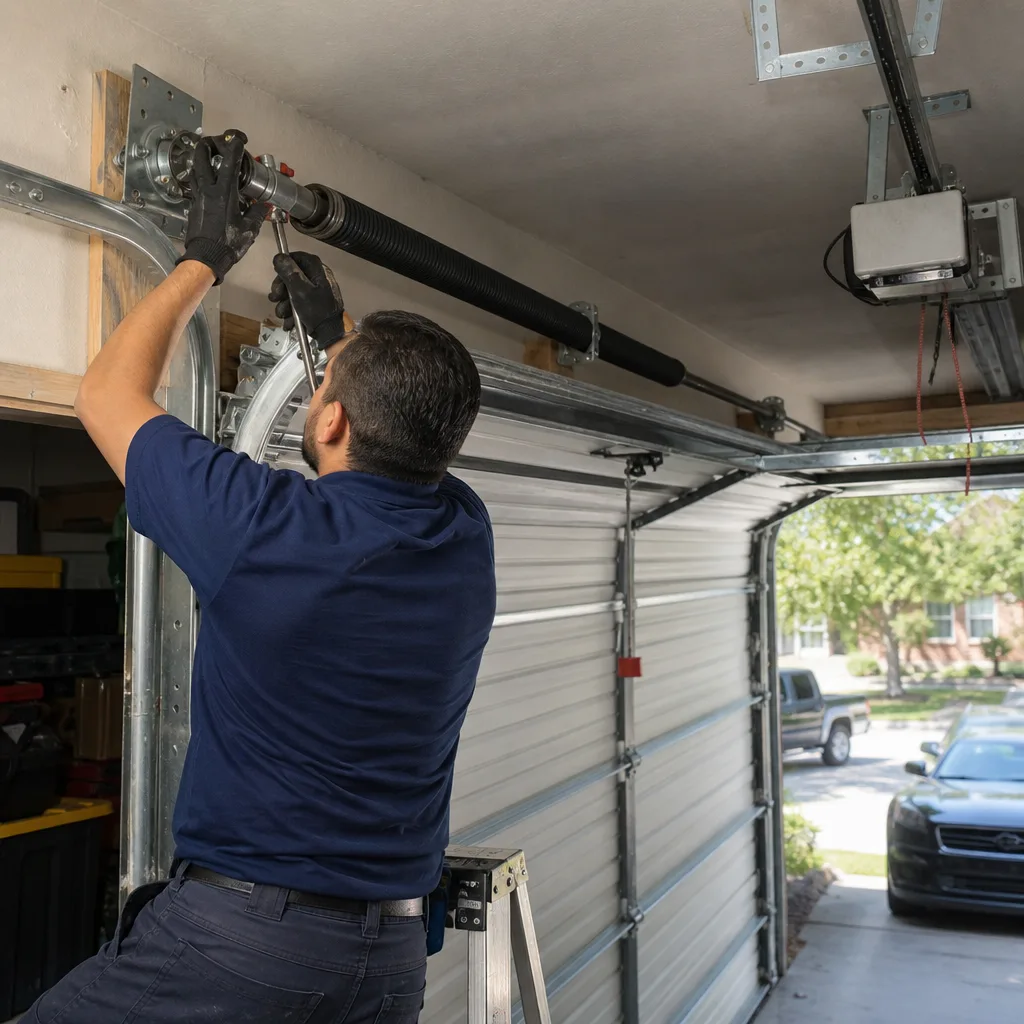 After
After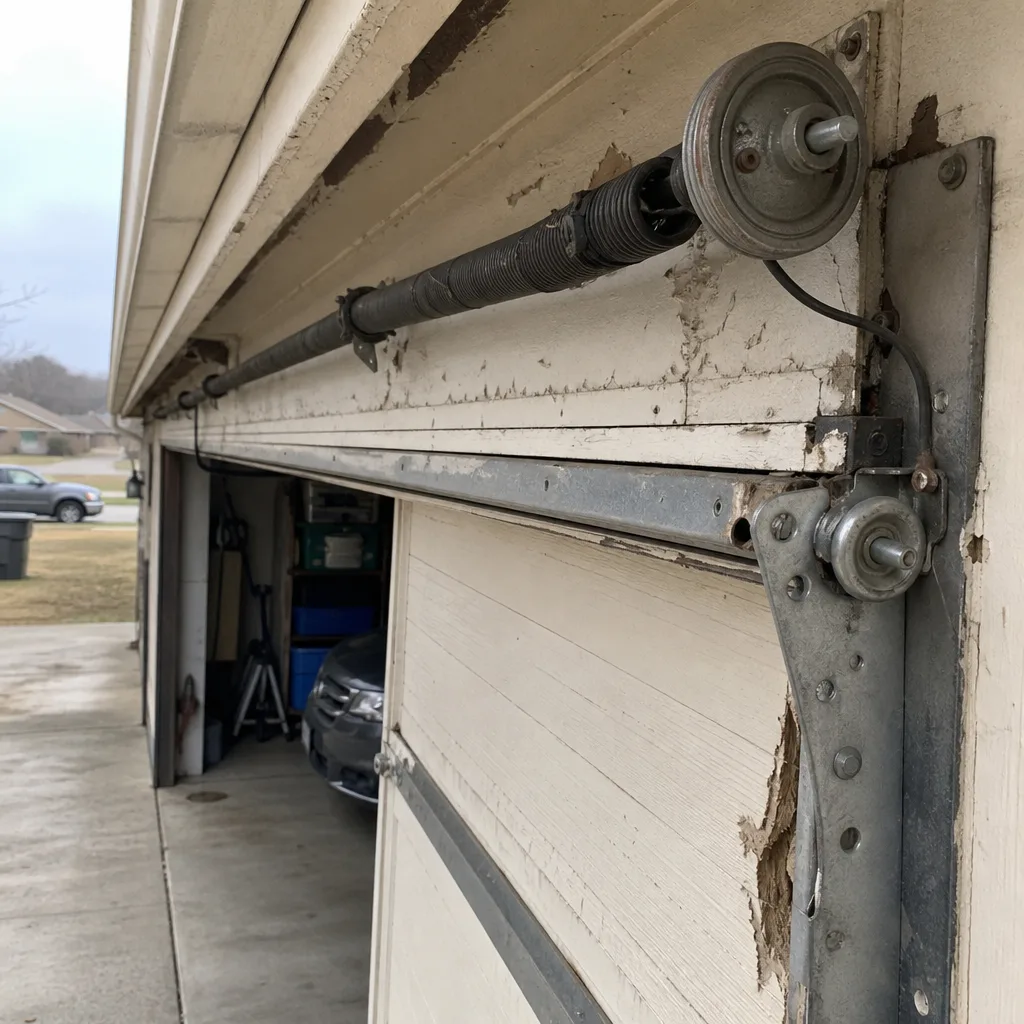 Before
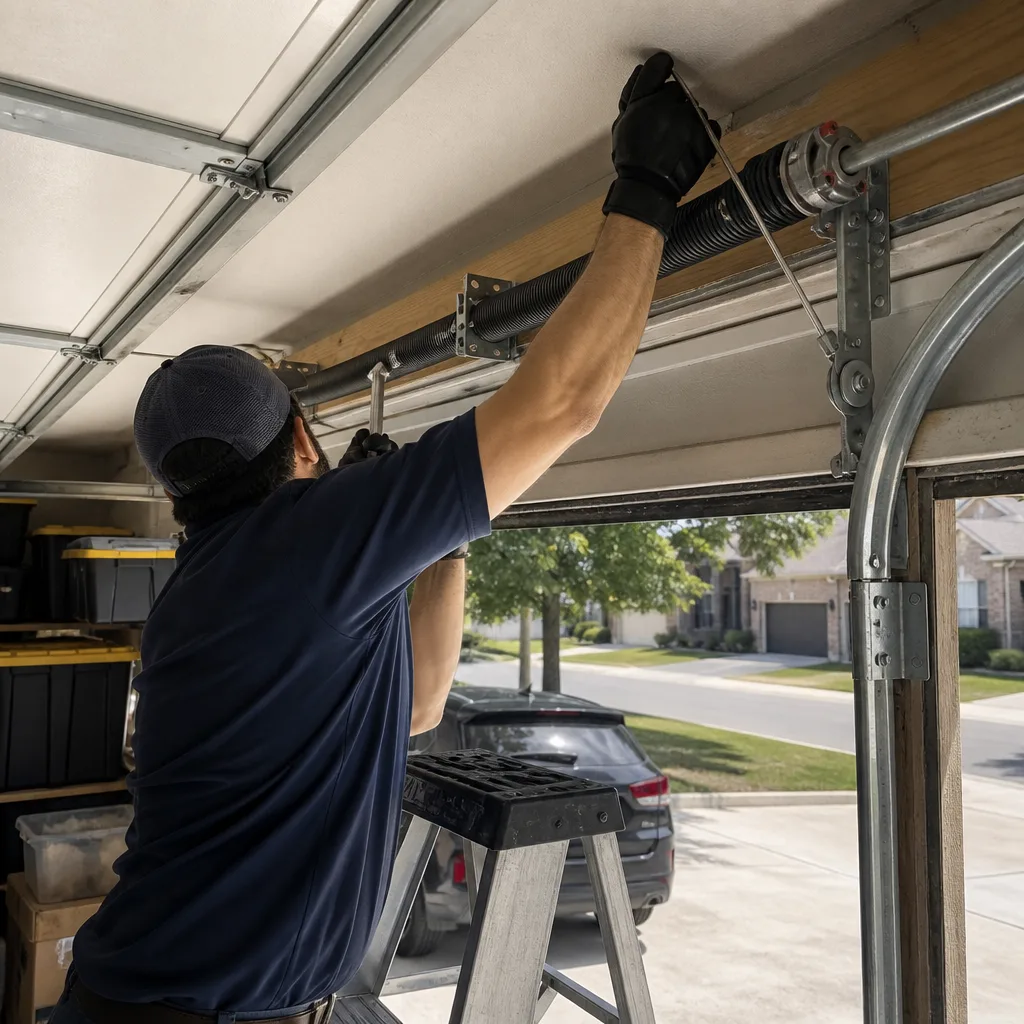 After
AfterSeasonal Garage Door Care for Denton: Year-Round Homeowner’s Guide
The freeze-thaw cycles Denton sees in January and February are short but sharp. A garage door whose bottom seal has gone brittle from summer UV will leak cold air and water in ways that do not show up until the floor drain is already backing up. Most homeowners here treat garage door maintenance as a once-a-year checklist, but Denton’s specific climate pattern - hard freezes, wet springs, sustained heat above 95°F, and temperature-variable shoulder seasons - stresses components in a sequence that demands a month-by-month approach. This guide maps the right task to the right Denton month, based on what we’ve seen in 42 years of working on doors across Denton County; for The Complete Guide to Garage Door in Denton, see our more comprehensive resource.
Quick Answer
Garage door maintenance in Denton should follow a four-season rhythm: inspect seals and springs after January freezes, test weatherstripping before March storms, lubricate rollers and check opener motors during June through August heat, and complete pre-winter track alignment and hardware tightening in October and November. Following this schedule prevents the three most common failure modes we see in Denton: cold-snap torsion spring breaks, humidity-warped bottom seals, and heat-fatigued opener motors. For a deeper look at whether to tackle issues yourself or call a pro, read our DIY vs Professional Garage Door: The Denton Homeowner’s Decision Guide.
Table of Contents
- January-February: Surviving the Cold Snap
- March-May: Storm Season and Seal Integrity
- June-September: Heat Stress on Moving Parts
- October-November: The Pre-Winter Window
- The Year-Round Denton Factor: Clay Soil and Track Alignment
- A Simple Monthly Checklist You Can Actually Keep
- Common Mistakes to Avoid
- When to Call a Professional
- Frequently Asked Questions
January-February: Surviving the Cold Snap
Torsion springs break most often in Denton during the first hard freeze of the year. The metal contracts in cold, and a spring already carrying 10,000+ cycles of fatigue will snap when the thermal stress adds its final load. We’ve replaced more springs in the week after a 20°F night than in the entire month of October.
The warning sound arrives about seven to ten days before failure: a sharp, metallic “pop” or “ping” when the door opens, distinct from the normal groan of an aging door. This is micro-fractures propagating through the spring wire. If you hear it, the spring is living on borrowed time. Operating a door with a failing torsion spring is dangerous - the spring holds the full weight of the door, and a break can send hardware flying or cause the door to slam shut unexpectedly.
What to do in January and February:
- Listen on the first cold morning. Run the door through a full cycle and note any new sounds. A rhythmic “thump” often means a spring is unbalanced; the sharp “ping” means imminent failure.
- Check the bottom seal with a flashlight. Close the door in evening darkness and look for light leaks. In Denton’s older neighborhoods near the square, we’ve seen original wood doors with seals so hardened they no longer compress against the concrete.
- Test the safety reverse. Place a 2×4 flat on the floor where the door meets the ground. The door should reverse within two seconds of contact. Cold-stiffened openers sometimes lose sensitivity calibration.
- Inspect cables for fraying. Look for unwinding strands or rust blooms where the cable wraps around the drum. Cold makes brittle cable more prone to snapping under load.
If your door uses an older Genie screw-drive opener, pay particular attention in cold weather. The grease in these units thickens below freezing, and the motor strains against what feels like a binding track. A stripped drive gear often follows. We carry replacement gears for Genie, LiftMaster, and Chamberlain units on our trucks, and most cold-weather opener repairs in Denton are completed in a single visit.
The Garage Door Repair in Denton page details our emergency response when a spring does break on a freezing morning. Our phones are staffed by a live person 24/7, including holidays, and we do not use an answering service.
March-May: Storm Season and Seal Integrity
Denton’s spring storm season brings sustained humidity, driving rain, and the occasional hail event. This is when a brittle bottom seal, already damaged by winter cold, fails completely. Water pools at the door threshold, seeps under the seal, and either drains toward the floor drain or, in homes with negative grade, back toward the foundation.
We’ve been called to homes in Southridge, Oakmont, and the older streets near Texas Woman’s University where the garage has developed a musty smell by late April. The cause is almost always a compromised seal that went unaddressed through winter. By May, the humidity has swollen any exposed wood framing, and the repair grows from a $45 seal replacement to a larger job involving trim and possible subfloor drying.
Spring is the optimal window for seal replacement in Denton. The moderate temperatures mean the new vinyl or rubber compound sets properly without the thermal shock of midsummer installation. We use heavy-duty EPDM rubber seals on most Denton residential doors - they resist the UV degradation that destroyed the previous seal and maintain flexibility across our temperature range.
What to check each March:
- Seal compression test: Close the door on a piece of standard copy paper at multiple points across the threshold. You should feel resistance pulling the paper free. If it slides out easily, the seal is not seating.
- Track drainage: Denton’s clay soils drain slowly. Ensure the concrete apron slopes away from the door, and that no debris blocks the gap between apron and driveway.
- Weatherstripping on stop molding: The vinyl or rubber strips along the door frame sides and top harden with age. Cracked strips whistle in spring winds and admit pollen and rain.
- Hinge and roller condition: Spring humidity accelerates rust on unlubricated steel rollers. A rusty roller does not roll; it slides, wearing the track and adding load to the opener.
Our Garage Door Installation in Denton service includes proper seal specification as standard, not an upsell. A door installed without attention to seal compression against the specific slope of your apron will leak within two seasons.
June-September: Heat Stress on Moving Parts
Sustained heat above 95°F does predictable damage to garage door components, but the pattern surprises most homeowners. The damage is not sudden; it accumulates invisibly through July and August, then manifests as failure in September when the first cool front arrives and thermal contraction stresses already-fatigued parts.
Roller wear is the hidden epidemic of Denton summers. Nylon rollers, popular for their quiet operation, soften in sustained heat. The bearing races loosen, the wheel wobbles on the shaft, and by September the roller is grinding against the track flange rather than rolling freely. Steel rollers fare better in heat but rust faster when autumn humidity returns. We recommend sealed-bearing steel rollers for Denton’s climate - they cost more upfront but outlast two sets of nylon rollers.
Opener motor failure follows a similar heat-fatigue curve. The motor windings in older LiftMaster and Chamberlain chain-drive units are rated for ambient temperatures to 120°F, but a west-facing garage in Denton with poor ventilation can exceed that by mid-afternoon. The first symptom is a motor that “hums” longer before engaging, or a thermal cutout that trips and resets after cooling. By the time the homeowner notices, the winding insulation has already degraded.
What to do during summer months:
- Lubricate with high-temperature grease. Standard white lithium grease liquefies above 100°F and drips onto vehicles. We use a synthetic garage door lubricant with a drop point above 350°F. Apply sparingly to rollers, hinges, and bearing plates - never to the track itself, which collects dust and grit.
- Test opener force settings monthly. Heat-expanded components increase rolling resistance. An opener adjusted for winter conditions may strain against summer friction, overheating the motor. The force adjustment is on the opener head unit - consult your manual, or call for our $89 Seasonal Tune-Up.
- Inspect the torsion spring for paint bubbling or rust. High humidity plus heat accelerates corrosion at the spring anchor points. Surface rust is cosmetic; pitting or scaling indicates replacement timing.
- Check door balance with the opener disconnected. The door should stay at half-open without drifting. Heat-expanded rollers add friction that masks spring weakening - a door that feels “heavy” in summer may actually have a failing spring.
The Garage Door Opener in Denton page covers our full opener service, including motor testing and force calibration. We stock replacement motors and logic boards for all major brands, including discontinued Raynor models common in Denton homes built 1995-2010.
October-November: The Pre-Winter Window
October and early November are the most underutilized maintenance weeks in Denton. The heat has broken, the storms have passed, and homeowners turn to lawn care and holiday planning. But this six-week window is when preventive work pays the highest return.
The specific grease matters more in Denton’s temperature-variable climate than in stable regions. A lubricant that flows properly at 100°F will gum at 25°F. Conversely, a winter-weight grease thickens unacceptably in summer. We use a multi-viscosity synthetic that maintains consistent film strength from 0°F to 150°F - the full range Denton sees.
Pre-winter tasks:
- Full hardware retorque: Vibration loosens nuts on hinges, brackets, and track supports. We check every fastener with a calibrated torque wrench - not a socket rattled on by feel.
- Track alignment verification: Use a level on the vertical track sections. They should be plumb within 1/4 inch over the full height. The horizontal sections should slope slightly toward the opener - 1/2 inch total from door to motor - so the door does not coast closed if the opener fails.
- Cable tension equalization: Uneven cable tension causes the door to rise crooked, loading one spring more than the other. This is measured, not eyeballed.
- Photo-eye cleaning and alignment: Dust from summer mowing and fall leaf debris clouds the sensors. Clean with a soft cloth, then verify alignment - both indicator lights should be steady, not flickering.
- Weatherstripping replacement if needed: Do not enter winter with a compromised seal. The first freeze will reveal what October’s mild weather concealed.
Our $89 Seasonal Tune-Up, available year-round, includes all of the above. There is no upsell pressure; if your door is sound, we say so. The flat price is stated before any work begins.
The Year-Round Denton Factor: Clay Soil and Track Alignment
This is the maintenance factor no generic guide covers, and it affects more Denton garage doors than all weather effects combined.
Denton sits on the eastern edge of the Blackland Prairie, with expansive clay soils that swell when wet and shrink when dry. A single summer drought can drop a foundation corner by 1/4 inch; a wet spring can lift it back. This slow, cyclical movement misaligns garage door tracks incrementally - rarely enough to jam the door suddenly, but enough to add rolling resistance that wears rollers, strains openers, and eventually causes the door to bind in the tracks.
The one visual check that catches it early: close the door and stand inside the garage, facing the door. Look at the gap between door edge and track on both sides. It should be uniform from top to bottom, typically 1/2 to 3/4 inch. If one side narrows toward the floor, or if the gap varies by more than 1/4 inch, the frame has shifted. The door is fighting the track on every cycle.
We see this pattern most in:
- Homes in the original Oak-Hickory corridor, built 1960-1985 on unreinforced slab edges
- Properties near Lewisville Lake with fluctuating water table
- Any home where the driveway apron has cracked or settled, indicating soil movement
Track realignment is not a DIY adjustment. The bolts are torqued to specification, and the track geometry affects spring balance and safety reverse function. Our technicians carry laser levels and measure alignment to manufacturer specification, not approximation. The 90-Day Done Right Promise covers all alignment work - if the door does not run true, we return at no charge, in writing, with no dispute process.
A Simple Monthly Checklist You Can Actually Keep
Most maintenance checklists fail because they demand too much. This one takes ten minutes, once a month, and catches the failures that matter.
- Visual sweep: Look at springs, cables, and rollers. Rust, fraying, or cracking means call for inspection.
- Balance test: Disconnect opener, raise door to half-open. It should stay. If it drifts, springs need adjustment.
- Reverse test: Place 2×4 flat on threshold. Door must reverse on contact.
- Listen: New sounds precede new problems. Grinding, popping, or squealing means something changed.
- Seal check: Light leak or paper slide test at threshold.
Schedule deeper seasonal work - lubrication, hardware retorque, track alignment - for the windows described above. Do not wait for failure. A spring replacement at failure costs more than preventive replacement, and it always fails at the worst possible time.
Common Mistakes to Avoid
- Using WD-40 on garage door parts. WD-40 is a solvent and light penetrant, not a lubricant. It displaces the grease already present and leaves metal unprotected. Use a product formulated for garage door mechanisms.
- Ignoring the “ping” before a cold snap. That sound is the spring telling you its remaining cycles are countable. Waiting guarantees a morning when the car is trapped inside.
- Replacing only one spring on a two-spring door. Springs are matched sets. The old spring has different fatigue characteristics than the new one, causing uneven lift and premature opener wear. We replace both, with matched wire size and cycle rating.
- Adjusting track position by eye. “It looks straight” is not straight. Misaligned tracks wear rollers and can derail a door under load. Use a level, or call someone who does.
- Skipping maintenance on a “new” door. Doors installed in 2020-2022 are now entering their first maintenance-critical period. The initial warranty lubrication has dried. Components have settled. This is when preventive care pays most.
- Assuming all garage door technicians are equivalent. Denton has no licensing requirement for garage door work. Anyone with a truck and ladder can advertise. Verify insurance, background checks, and written warranty before allowing work on a door that weighs 150-400 pounds and is under spring tension.
When to Call a Professional
Call when you hear a new sound, see a new gap, or the door’s behavior changes. Do not attempt to adjust torsion springs, cables, or track mounting - these components are under lethal tension and require proper tools and training. The Mainspring Garage Door Co. home page lists our full service area and credentials.
Specific scenarios that warrant immediate professional inspection: a door that reverses unpredictably, a spring with visible separation in the coils, a cable that has unwound from the drum, or a door that has come off its tracks. These are not maintenance items; they are safety hazards.
Mainspring Garage Door Co. offers free estimates in Denton. Call (817) 623-1087 and a live person will answer, 24/7. We do not use phone trees or after-hours answering services. Our technicians arrive with springs, cables, rollers, and opener parts on the truck, and most jobs are completed in a single visit. The price is stated upfront, in writing, before any work begins.
Frequently Asked Questions
Once yearly is sufficient for most Denton homes, timed for October or November before winter stress. Doors with heavy use - more than four cycles daily - benefit from semi-annual service. Call (817) 623-1087 to schedule our $89 Seasonal Tune-Up; estimates are free if additional work is needed.
Cold thickens lubricant, contracts metal components, and makes rollers and hinges less forgiving of minor misalignment. The sound is your door working harder. A pre-winter lubrication with temperature-stable grease eliminates most cold-weather noise.
Homeowners can apply lubricant to accessible hinges and roller stems. Torsion springs, bearing plates, and internal opener gears require specific products and access techniques. If you are unsure which points to hit or which grease to use, our $89 tune-up includes full lubrication and safety inspection.
Our Seasonal Tune-Up is $89, covering full inspection, lubrication, hardware retorque, balance test, and safety reverse verification. Repairs found during inspection are quoted upfront before any additional work. We also offer $50 off any repair over $250, a free second opinion on any written estimate, and a permanent 5% discount for seniors and veterans.
Torsion spring fatigue, accelerated by our temperature swings and the high cycle counts of suburban life. A typical Denton household opens and closes the door 1,500-2,000 times yearly. Standard springs are rated for 10,000 cycles - five to seven years of normal use. We install high-cycle springs on request for extended service life.
No. The price we quote is the price you pay. If our inspection reveals additional needs, we explain them and quote separately before any work beyond the agreed scope. There are no surprises on the bill. This is our standard practice, backed by the 90-Day Done Right Promise.
The Bottom Line
Denton’s climate is not extreme, but it is specific - and specificity is what generic maintenance advice misses. The hard freezes of January stress springs already fatigued by years of cycles. The wet springs of March and April exploit seals weakened by summer UV. The sustained heat of July and August softens rollers and degrades opener motors invisibly. And the expansive clay beneath Denton shifts foundations slowly, misaligning tracks year-round regardless of weather.
The homeowners who avoid emergency repairs are not luckier. They match the right task to the right month, they listen for new sounds, and they address small gaps before they become failures. Maintenance is not complicated. It is disciplined.
If you would rather have a professional maintain the discipline, Mainspring Garage Door Co. has served Denton since 1984. Explore more guides & resources on our blog. Our technicians are background-checked, uniformed, and trained under our K.E.Y.S. values: Krafted right, Every time, Your home first, Standing behind it. We answer the phone with a live person, 24/7. We state the price before the wrench turns. And we stand behind every job with the 90-Day Done Right Promise, in writing, with no argument.
Call (817) 623-1087 for a free estimate, or schedule our $89 Seasonal Tune-Up and enter winter with a door that runs quiet, runs true, and does not surprise you.
Written by Carl Dutton, Owner at Mainspring Garage Door Co., serving Denton since 2016.