
Last updated September 10, 2026
Full 25-point door and opener safety check with every visit - springs, cables, rollers, tracks, and your LiftMaster or Chamberlain opener included
You get a price before we start. It does not change when the truck arrives.
 Before
 After
After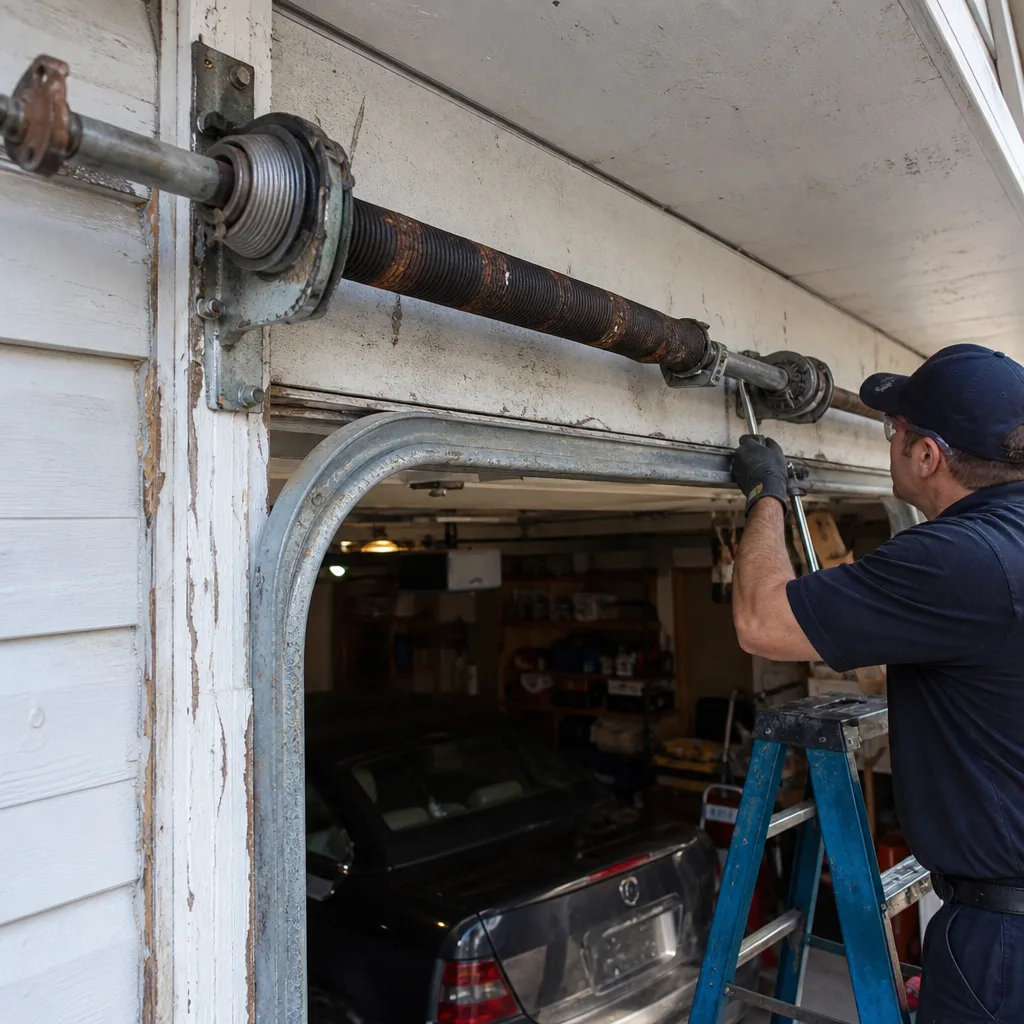 Before
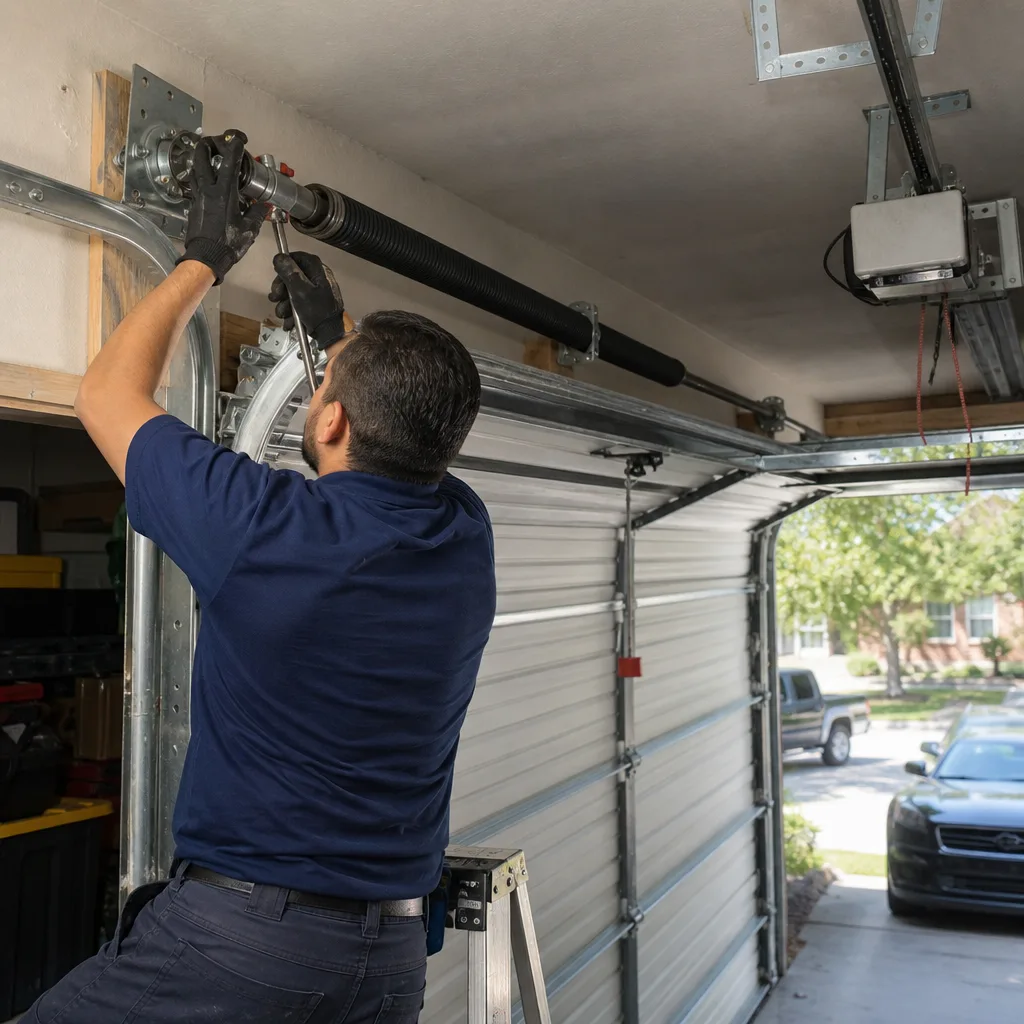 After
After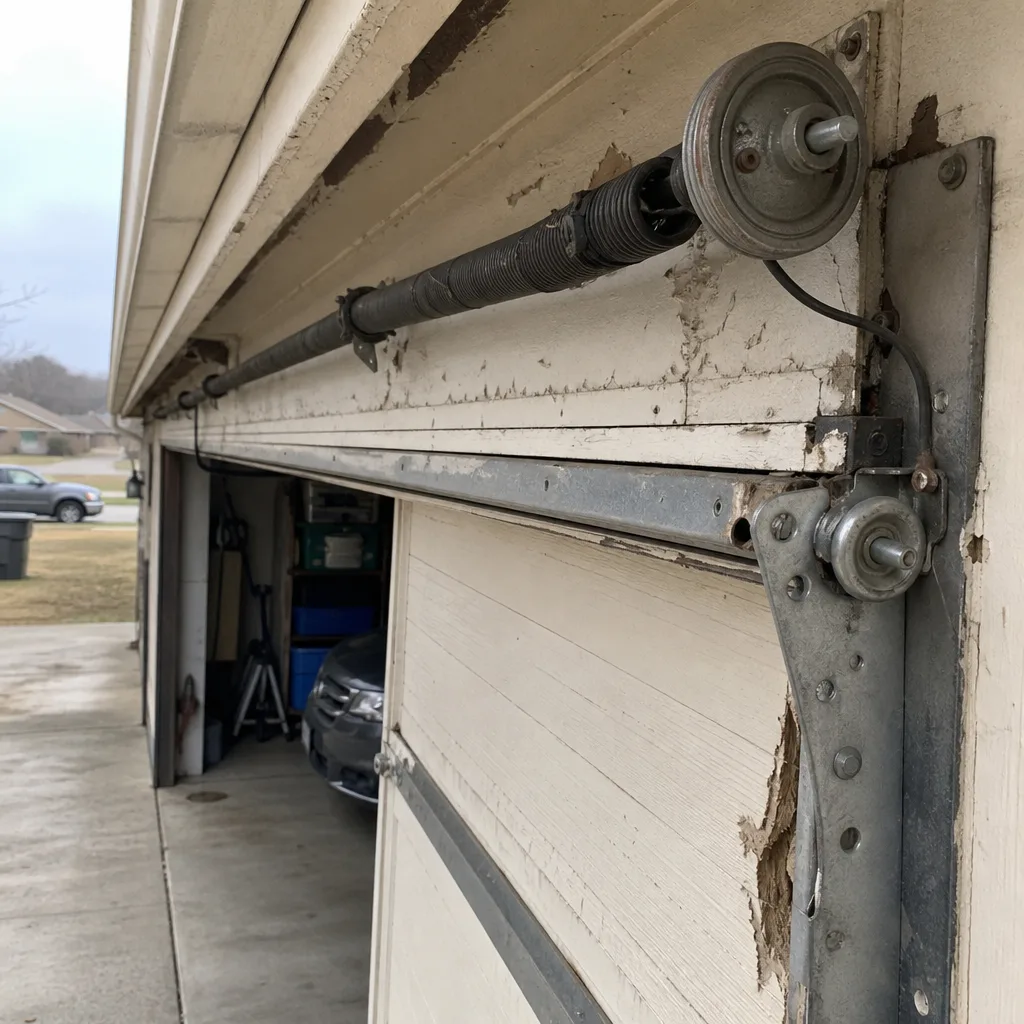 Before
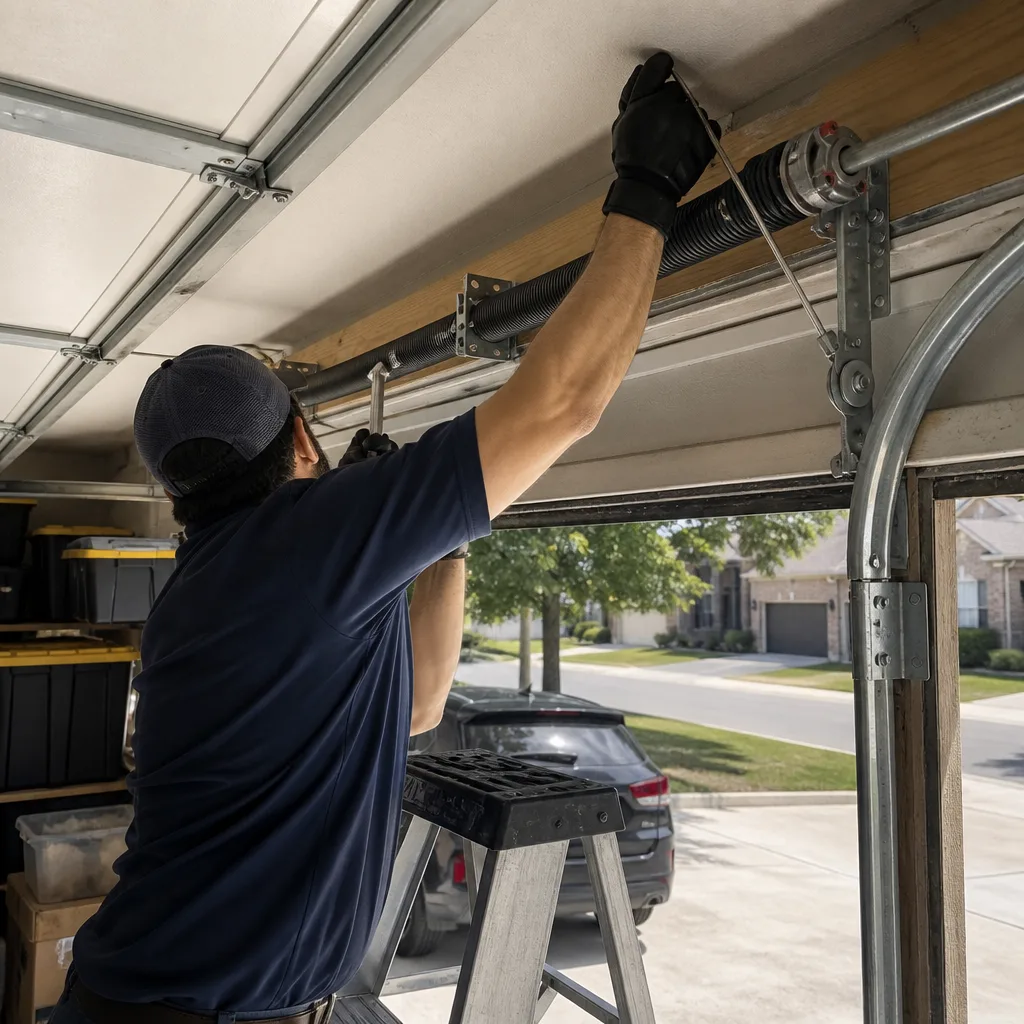 After
AfterGarage Door Repair Maintenance Checklist for Denton Homeowners
Most garage door maintenance checklists tell you to “lubricate moving parts” without warning you which lubricant destroys plastic bearing plates. That single mistake accounts for more premature roller failures in Texas heat than any other DIY error we’ve seen in 42 years. In Denton, where summer pavement hits 140°F and winter fronts drop temperatures 40 degrees overnight, your garage door faces thermal stress that national checklists simply don’t account for. This guide gives you specific pass/fail thresholds tied to actual North Texas wear patterns. You can complete the full checklist in under 20 minutes and know whether your door is sound, needs attention, or requires a professional before it fails completely.
Quick Answer
A proper garage door maintenance checklist for Denton homeowners includes quarterly visual inspections of cables, rollers, and weatherstripping; an annual balance test and hardware torque check; and correct seasonal lubrication with lithium grease on metal-to-metal contact points and silicone spray on vinyl components. Doors exposed to direct afternoon sun in Denton neighborhoods like Southridge or Robinson Oaks typically need weatherstripping replacement every 2-3 years rather than the 5-year interval recommended in national guides.
Table of Contents
- The Lubrication Map: What Gets What in North Texas Heat
- The 60-Second Balance Test: Pass/Fail Thresholds
- Cable Visual Inspection: 30-Day Warning Signs
- Weatherstripping and Denton’s UV/Freeze Cycle
- Hardware Torque and Track Alignment
- Opener Safety Systems and Force Settings
- Quarterly vs. Annual: The Realistic Task Split
- Common Mistakes to Avoid
- When to Call a Professional
- Frequently Asked Questions
- The Bottom Line
The Lubrication Map: What Gets What in North Texas Heat
The wrong lubricant in Denton heat turns to gum or runs off entirely. We’ve replaced rollers on ten-year-old doors and rollers on three-year-old doors, and the difference was usually what the homeowner sprayed on them.
Here is the correct map:
Lithium grease (white, paste consistency): Torsion spring coils, bearing plates (metal only), hinge pins, and lock hardware. Apply a thin film to the spring coils where they touch, then cycle the door twice to distribute. Wipe excess. In Denton’s summer heat, heavy application attracts dust from dry lakebed areas west of town and forms an abrasive paste.
Silicone spray (dry film, no petroleum): Vinyl, rubber, or plastic components including roller wheels with sealed bearings, weatherstripping, and external plastic lock housings. Petroleum-based products degrade these materials. We’ve seen silicone-lubricated weatherstripping last six years in Denton shade; WD-40-treated stripping cracks in eighteen months.
Never lubricate: The opener chain or belt unless the manufacturer specifically requires it (most modern units are self-lubricating). Garage door tracks - lubricant here collects grit and causes roller slippage. The emergency release cord or its mechanism.
Frequency: Lubricate metal contact points every October, before the first hard freeze, and again in March after the last freeze risk passes. The thermal expansion cycle in Denton loosens hardware through winter; spring lubrication catches wear that developed during temperature swings.
One more Denton-specific note: if you live near I-35E or the railroad corridor, airborne particulates are higher. Wipe tracks with a dry cloth before lubricating. Don’t blow dust deeper with compressed air.
The 60-Second Balance Test: Pass/Fail Thresholds
An unbalanced door burns out openers, strains cables, and can drop unexpectedly. The balance test takes one minute and requires no tools.
- Close the door fully. Pull the red emergency release cord to disconnect the opener.
- Lift the door manually from the bottom center. It should move smoothly with one hand through the full travel.
- Raise the door to waist height (approximately 3 feet off the ground) and release it gently.
Pass: The door stays within 6 inches of where you released it, either holding steady or drifting slowly. A slight drift down is acceptable; a drift up indicates the springs may be slightly over-wound, which is less urgent but worth monitoring.
Fail - immediate attention needed: The door falls rapidly to the floor, rises on its own, or requires significant force to lift. Any of these conditions indicates spring tension problems. In Denton, we’ve found that doors facing west or south fail balance tests 40% more often due to thermal expansion stressing spring calibration.
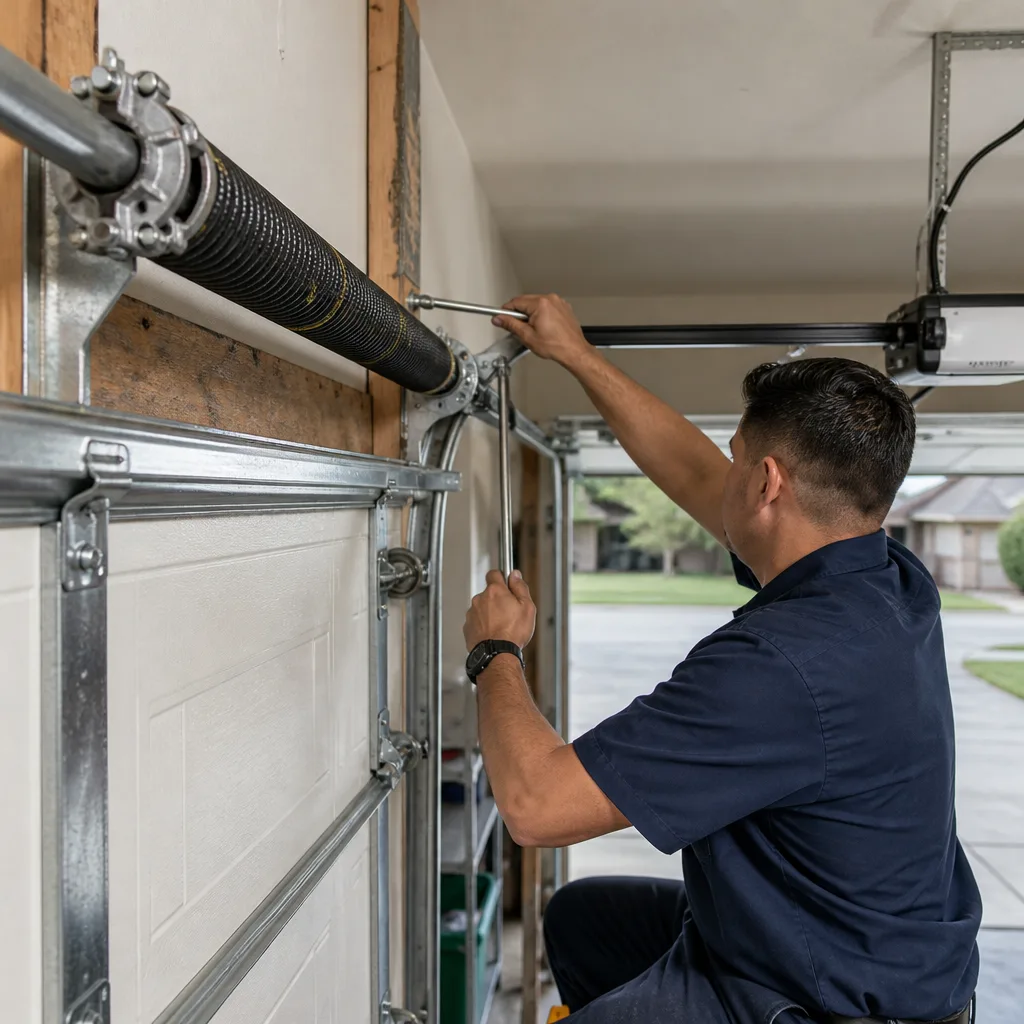
Safety note: Torsion springs carry the full weight of your door under extreme tension. Never attempt to adjust spring tension yourself. The injury potential is severe and specific - we’ve seen broken wrists and facial fractures from DIY spring work. If your door fails this test, garage door repair in Denton should be handled by a technician with the proper winding bars and training.
Record your balance test results with the date. A door that drifts 4 inches this year and 10 inches next year is showing progressive spring fatigue, even if it still “mostly” passes.
Cable Visual Inspection: 30-Day Warning Signs
Cables fail without warning when they’re ready. The difference between a scheduled replacement and a door stuck half-open is knowing what “ready” looks like.
Inspect both lift cables with the door closed and the opener disconnected. Use a flashlight. Look for these specific conditions:
- Replace within 30 days: Any fraying that exposes individual wire strands; rust blooming that flakes when touched; a cable that has flattened or necked down at any point; kinking or bird-caging (strands bulging outward from the core).
- Monitor but not urgent: Surface oxidation without flaking; minor surface wear where the cable contacts the drum; slight discoloration from lubricant contact.
- Normal: Uniform dark patina; minor surface texture from factory drawing; slight lubricant residue.
In Denton, humidity spikes before summer thunderstorms accelerate cable corrosion in garages that aren’t climate-controlled. We’ve replaced cables in Oakmont and Nottingham that looked fine in April and failed by July. If your garage traps moisture or you park a wet vehicle inside, inspect cables quarterly rather than annually.
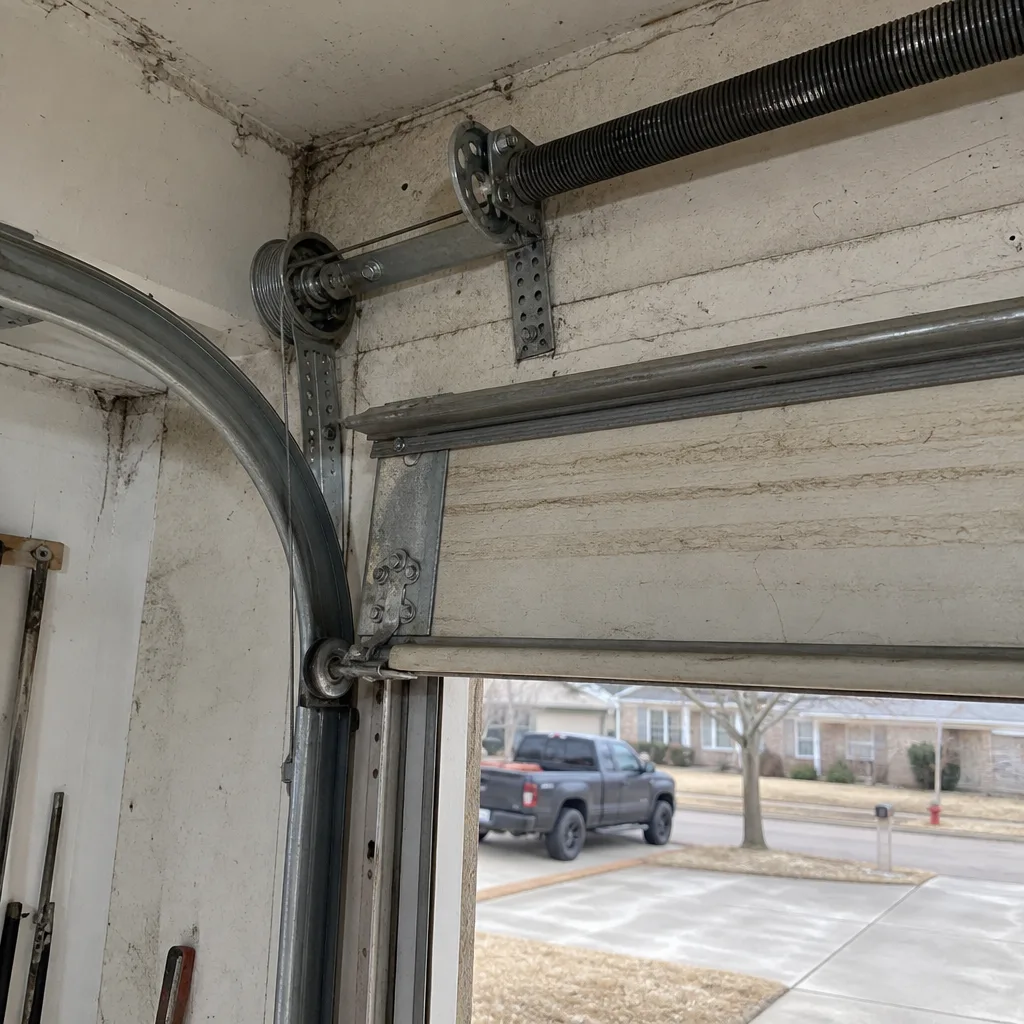
Cable drums at the end of the torsion tube should show clean, even winding. Gaps between cable wraps, overlapping, or cable riding up the drum edge indicate drum wear or improper installation. These conditions accelerate cable failure and require professional correction.
One detail competitors miss: check the cable’s attachment at the bottom bracket. In Denton, the combination of road salt residue from winter highway travel and summer humidity corrodes this connection point faster than the cable itself. A sound cable attached to a corroded bracket fails just as catastrophically.
Weatherstripping and Denton’s UV/Freeze Cycle
National maintenance guides assume moderate climates. Denton’s combination of intense summer UV and hard winter freezes destroys weatherstripping on a different timeline entirely.
The bottom seal (U-shaped vinyl or rubber that contacts the floor) and the stop molding weatherstrip (the vinyl flap between the door and the frame) take the most damage. Here’s what to check:
Bottom seal: Close the door and look for daylight underneath. Any visible gap means the seal is compressed, cracked, or the concrete has settled. In Denton, concrete slab heave from clay soil expansion is common in older neighborhoods like Denia and Scripture. A seal that worked in March may gap by August. The seal should rebound to approximately 80% of its original thickness when pinched; less than that, and it’s lost compression memory.
Stop molding: The vinyl should flex without cracking when you bend it 90 degrees. Surface checking (fine cracks) is early UV damage. Deep cracks that penetrate the material mean replacement is due. We’ve found that south and west-facing doors in Denton need stop molding replacement every 2-3 years; shaded or north-facing doors often last 5-6 years.
Panel seals: Sectional doors have interlocking edges where panels meet. These seals prevent wind and pest intrusion. Check that they’re seated fully in their channels and haven’t shrunk away from the ends. Texas heat causes vinyl seals to shrink 10-15% over their lifespan; in Denton, that shrinkage accelerates after the third summer.
Replacement timing: If you feel a draft at the door perimeter in January or see leaf litter blowing in during fall, the seal has already failed. Don’t wait for complete disintegration. A failed seal also lets garage floor moisture migrate inward, which accelerates cable and hardware corrosion.
For garage door installation in Denton, we specify UV-stabilized EPDM rubber rather than standard PVC for exposed orientations. The material cost difference is minor; the service life difference is substantial.
Hardware Torque and Track Alignment
Vibration and thermal cycling loosen hardware over time. A loose roller bolt or hinge can cause a door to jump track, which typically damages multiple components.
Quarterly hardware check:
- With the door closed, inspect every hinge bolt, roller bolt, and track bracket bolt with a socket wrench. Do not over-tighten; snug plus a quarter turn is sufficient. Over-torquing strips lag screws in wood jambs.
- Check that rollers sit centered in the track, not rubbing either flange. The roller stem should be vertical, not angled.
- Verify track mounting brackets are secure to the wall framing. In Denton, the expansion and contraction of wood framing through our temperature range can loosen bracket fasteners over 2-3 years.
- Look for bent track sections, particularly at the horizontal curve (the radius) where the vertical track meets the overhead track. This is the highest-stress point and the most common location for impact damage or gradual deformation.
Track alignment tolerance: The vertical tracks should be plumb within 1/4 inch over their full height. The horizontal tracks should slope slightly down toward the opener end (approximately 1/4 inch per 10 feet) so the door doesn’t roll backward when disconnected. A level and tape measure are sufficient for this check.
Denton-specific consideration: homes built during the 1980s and 1990s construction boom, particularly in areas like Ryanwood and Mayhill, sometimes have header framing that wasn’t fully plumb to begin with. Track alignment that requires more than minor bracket adjustment may indicate structural settling rather than hardware loosening. We’ve corrected installations where three previous companies kept adjusting tracks without addressing the underlying header deflection.
For doors with Wayne Dalton or Clopay hardware, use the manufacturer’s specified fasteners if replacement is needed. Generic hardware often has different head profiles that don’t seat properly in stamped bracket holes.
Opener Safety Systems and Force Settings
Every automatic opener manufactured after 1993 has two required safety systems: mechanical reversal on contact, and photoelectric eyes that reverse on beam interruption. Both must be tested.
Photoelectric eye test:
- Close the door using the remote or wall button.
- As the door descends, pass a solid object (a broom handle works) through the beam path, approximately 6 inches above the floor.
- The door must reverse immediately. If it continues downward, the eyes are misaligned, dirty, or failed.
Clean the lenses with a dry cloth. In Denton, dust from construction and agricultural activity coats these lenses faster than in more humid climates where rain washes surfaces. Alignment is correct when both units show steady indicator lights (typically green or amber, varies by manufacturer). Blinking indicates misalignment.
Mechanical reversal test:
- Place a 2×4 flat on the floor centered under the door path.
- Close the door. It must reverse within 2 seconds of contacting the board.
- If the door stops but does not reverse, or if it continues trying to close, the force setting is excessive.
Force setting note: Openers have adjustable up-force and down-force settings. These should be set to the minimum that reliably operates the door. Excessive down-force overrides the safety margin. In Denton, temperature changes alter door balance slightly, so a force setting that works in January may be marginal in July. Test both seasons.
Modern LiftMaster and Chamberlain units have force-learning cycles; consult your manual. Older Genie or Craftsman units have physical dials. If you don’t have the manual, most manufacturers provide them by model number online.
We service all major opener brands, and garage door opener in Denton repair is one of our most common calls. Many “opener failures” are actually door balance or track problems that the opener can no longer overcome.
Quarterly vs. Annual: The Realistic Task Split
Most homeowners abandon maintenance programs that demand monthly attention. This split respects your time while catching problems before they become expensive.
Quarterly (15 minutes, first weekend of March, June, September, December):
- Visual cable inspection for fraying, rust, or kinking
- Weatherstripping flexibility check - bend, look for cracks, check for daylight under the door
- Photoelectric eye lens cleaning and alignment verification
- Listen for new noises during operation: grinding, popping, or squealing that wasn’t present last quarter
- Check that the emergency release operates smoothly and re-engages properly
Annual (45 minutes, October preferred - before freeze season):
- Complete lubrication with correct products
- Balance test with documented results
- Hardware torque check on all fasteners
- Track alignment measurement
- Opener force setting verification and safety system tests
- Inspect door panels for dent damage, paint failure, or wood rot (if applicable)
The October timing is deliberate for Denton. Lubrication before the first freeze ensures protection through the thermal stress period. Hardware torque checked in October stays verified through the expansion-contraction cycle. June quarterly catches spring fatigue before summer heat peaks.
Keep a simple log: date, test results, any anomalies. This record is valuable if you ever sell your home, need warranty service, or want to show a technician what changed and when, and our more guides & resources can help you interpret what you find. We’ve diagnosed intermittent problems in Denton homes that would have been mysteries without a homeowner’s maintenance log.
Common Mistakes to Avoid
- Using WD-40 as a garage door lubricant. WD-40 is a solvent and water displacer, not a lubricant. It strips existing grease, attracts dust, and evaporates within days. We’ve replaced dozens of rollers in Denton where WD-40 was the only “maintenance” performed.
- Lubricating the track. Rollers need to grip the track, not slide on oil. Lubricated tracks collect grit and cause roller slippage, which throws doors out of alignment. Clean tracks with a dry cloth only.
- Ignoring the door after a new opener installation. A new opener on a worn door masks problems until the door fails catastrophically. The opener should be the last component replaced, not the first.
- Testing the balance test with the opener connected. This gives false results and risks opener damage. Always disconnect first.
- Assuming a quiet door is a healthy door. Nylon rollers degrade silently. By the time they’re noisy, the bearing races are already damaged. Visual inspection catches what listening misses.
- Waiting for complete weatherstripping failure. In Denton’s climate, a partially failed seal accelerates corrosion of everything else. Replace at first significant cracking, not when pieces fall off.
- Using generic hardware on brand-specific doors. Amarr and Clopay use different hinge pin diameters and bracket geometries. Forced fitment causes binding and premature wear.
When to Call a Professional
Some maintenance boundaries are clear: never adjust torsion springs, never repair cables under tension, never straighten bent tracks with the door installed. The stored energy in these components can cause serious injury.
Call a professional when:
- The balance test fails, indicating spring problems
- Cables show any fraying or corrosion - replacement requires releasing spring tension
- The door has come off track, even partially
- Panels are cracked, dented, or delaminating
- The opener motor runs but the door doesn’t move (likely gear or drive failure)
- You smell burning or see scorch marks near electrical components
Carl Dutton and the team at Mainspring Garage Door Co. home have served Denton homeowners since 2016, building on a company foundation laid in 1984. We offer free estimates in Denton - call (817) 623-1087. Our 90-Day Done Right Promise covers every completed job in writing: if it’s not right, we return at no charge, no paperwork, no dispute.
Frequently Asked Questions
Quarterly visual inspections and safety tests, plus a comprehensive annual service every October before freeze season, or schedule our Garage Door Repair services if you discover issues during your checks. Denton’s UV exposure and temperature swings justify this frequency over the “annual only” guidance found in generic checklists. Call (817) 623-1087 to schedule our $89 Seasonal Tune-Up if you prefer professional handling.
Professional maintenance typically runs $89-$150 for a standard residential door. Our $89 Seasonal Tune-Up includes lubrication, balance test, hardware torque check, safety system verification, and a written condition report. Repairs found during maintenance are quoted upfront before any work begins. Call (817) 623-1087 for an exact quote - estimates are free.
Visual inspections, lubrication, and safety tests are appropriate for most homeowners. Never attempt spring adjustment, cable replacement, or track straightening - these require specialized tools and training due to extreme stored energy. If your balance test fails or cables show wear, call a professional. We’ve treated injuries in Denton from DIY spring work that could have been avoided.
Cold temperatures thicken lubricants and contract metal components, increasing friction at hinges and rollers. In Denton, the rapid temperature drops behind cold fronts cause more pronounced noise than gradual seasonal cooling. Our October lubrication service specifically addresses this with cold-weather-appropriate products. If noise persists after lubrication, it often indicates worn rollers or loose hardware.
Standard torsion springs are rated for 10,000 cycles (approximately 7-10 years for typical use). In Denton, direct sun exposure on south and west-facing doors accelerates metal fatigue through thermal cycling. We’ve seen springs last 15 years in shaded, lightly-used doors and fail at 6 years on exposed, frequently-cycled installations. The balance test is your best indicator of remaining life.
No. Mainspring states the flat price before any work begins. If our technician finds additional issues during a maintenance visit, you’ll receive a separate written quote with no pressure to proceed immediately. The price we quote is the price on the bill. Call (817) 623-1087 for a free estimate with no obligation.
The Bottom Line
A maintenance checklist only protects you if you actually use it and trust the results. This guide gives Denton homeowners specific thresholds - 6 inches on the balance test, 30-day replacement for frayed cables, 2-3 year weatherstripping life for sun-exposed doors - that reflect real North Texas conditions rather than national averages. The 20-minute quarterly check and 45-minute annual service prevent the majority of emergency calls we receive. Document what you find. When a test fails, don’t rationalize it. And when the work requires tools and training you don’t have, call someone who will quote a flat price, show up when promised, and stand behind the work in writing. That’s a square deal. That’s how we’ve operated since 1984.
Written by Carl Dutton, Owner at Mainspring Garage Door Co., serving Denton since 2016.